
4 Automated Keyword Research Tools for Growth Teams
Automated keyword research should do more than return a larger spreadsheet. For a growth team, the useful outcome is a prioritised, continuously usable list of topics that fits your site, audience, competitive reality and production capacity.
The best choice depends on where the workflow breaks today. Some teams need deeper keyword and SERP data. Others need faster clustering. Others need research to become a content calendar, draft and publishing workflow without repeated handoffs.
We selected the tools below because each can automate a meaningful part of keyword research, from opportunity discovery and competitiveness analysis to clustering, prioritisation or downstream production. We assessed every option against the same five criteria:
- Opportunity discovery: How well does it expand ideas beyond a single seed term?
- Competitiveness and intent: Does it provide difficulty, SERP, intent or business-value signals?
- Organisation: Can the team cluster, map and retain decisions?
- Workflow automation: Does research connect to planning, content or ongoing monitoring?
- Pricing fit: Is the commercial model clear enough to evaluate against your operating needs?

Table of contents
- 1. GrowthScout
- 2. Semrush Keyword Magic Tool
- 3. Ahrefs Keywords Explorer
- 4. Machined
- How to choose the right automated keyword research tool
- Frequently asked questions
- Turn research into a plan your team can run
1. GrowthScout
Best use case
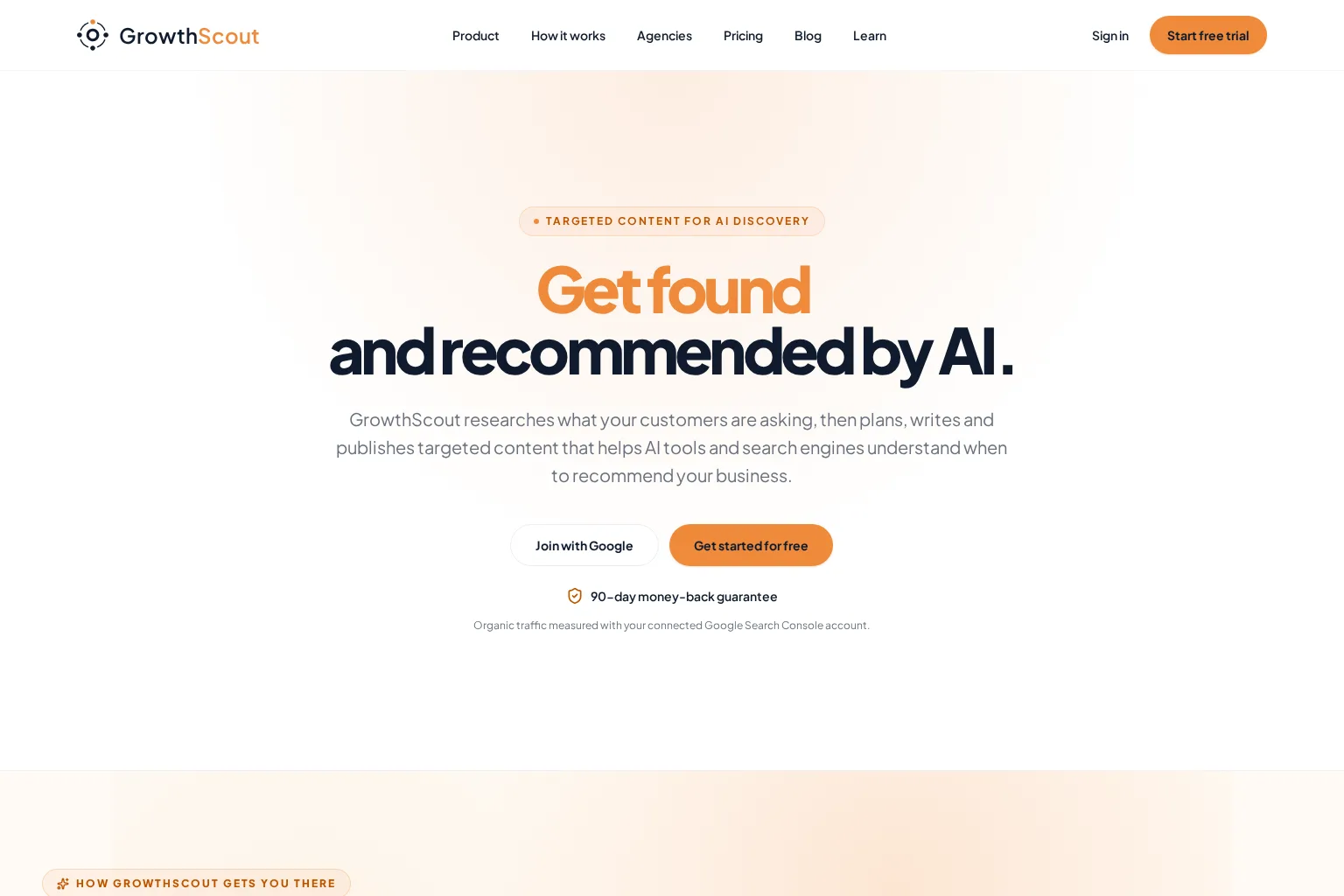
GrowthScout is the strongest fit for growth teams that want automated keyword research to produce an owned, prioritised content workflow instead of a research export that still needs to be sorted, briefed and scheduled.
Key capabilities
GrowthScout crawls your site and combines that context with your goals, audiences and competitors. It then weighs intent, competitor evidence, existing coverage and business relevance before recommending opportunities. Those opportunities can become a visible 30-day content calendar, with research, article generation and review or publishing kept in the same workflow.
That approach is particularly useful when your backlog is disconnected from the website it is meant to grow. You can use the core GrowthScout workflow to connect keyword opportunities to a practical plan, then retain editorial review before publishing. Agencies can also keep website context, opportunities, article settings and delivery workflows separate for each client in the GrowthScout agency workspace.
Limitations
GrowthScout is designed around a connected planning and publishing process. Teams that only need a standalone keyword database for highly specialised analysis may prefer a data-first platform alongside their existing operations.
Pricing approach
GrowthScout offers a 3-day trial with three article generations. If you do not cancel before it ends, the plan continues at £74 per month. Additional websites use a separate in-app checkout, where the current recurring price is shown before confirmation.
Who should choose it
Choose GrowthScout if your priority is to turn research into an ongoing organic-growth system that is grounded in your website and still gives your team control over review, voice and publishing.
2. Semrush Keyword Magic Tool
Best use case
Semrush is a strong fit for teams that need broad keyword discovery, familiar SEO metrics and daily position tracking within a large search-marketing platform.
Key capabilities
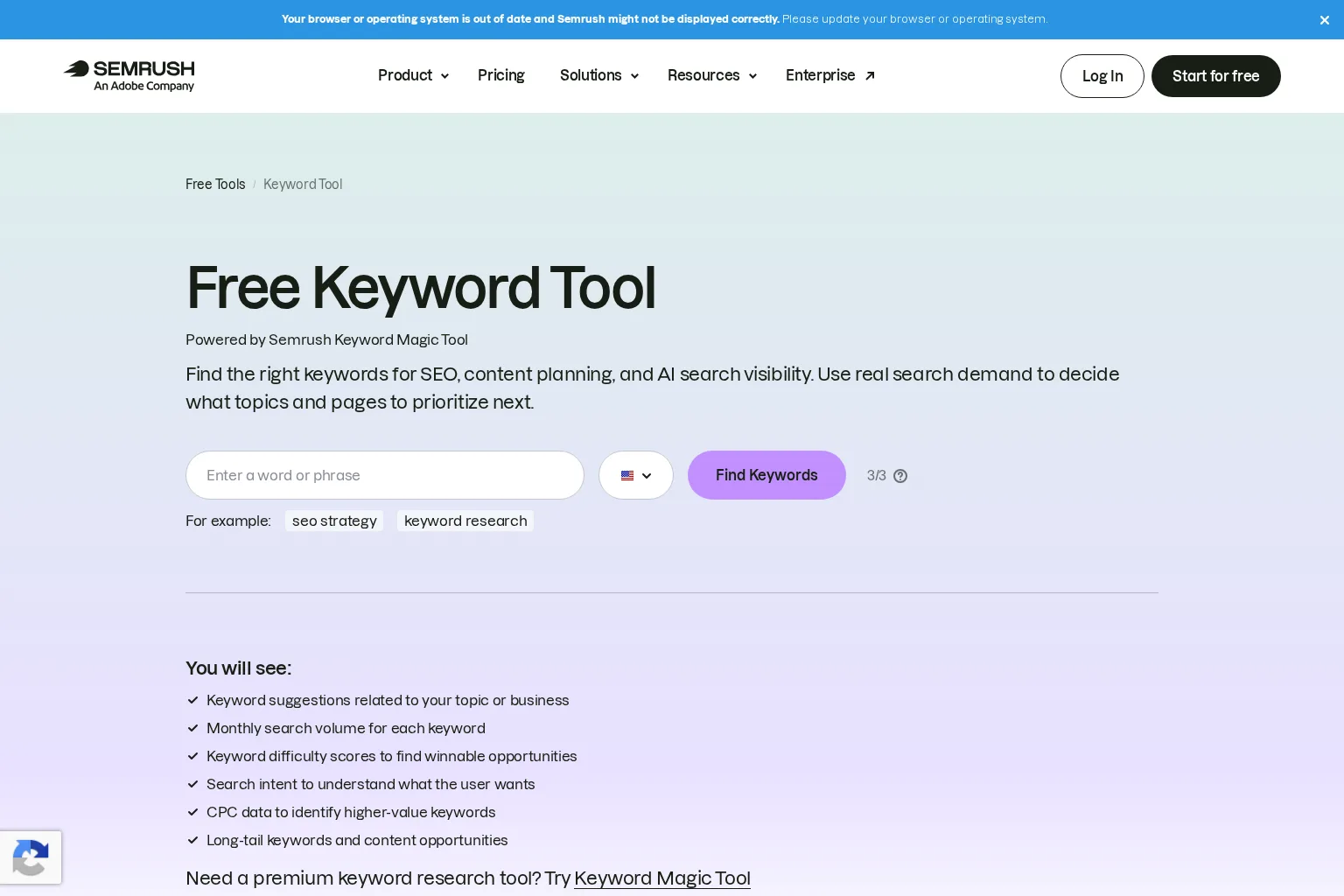
Its Keyword Tool, powered by Keyword Magic Tool, provides related suggestions, monthly search volume, keyword difficulty, search intent, CPC data, long-tail ideas and content opportunities. Semrush also frames keyword selection around relevance, volume, difficulty and intent, which is useful for teams that need a repeatable evaluation method across SEO and paid search.
The UK pricing page lists daily keyword tracking and basic keyword research and competitor analysis in its SEO plan. That makes Semrush a practical option when a team wants research and ongoing visibility measurement in the same wider platform.
Limitations
The workflow remains analyst-led. Teams still need to decide seed topics, set filtering rules, validate intent and translate the final set into a prioritised content backlog. Build clear ownership for those steps if your aim is continuous automation rather than faster manual research.
Pricing approach
On Semrush's UK pricing page, the SEO plan is listed at £95.07 per month when billed annually, or £113 monthly. The listed package includes monitoring for five websites and daily tracking for 500 keywords. Check the live checkout and plan limits before committing because packages and allowances can change.
Who should choose it
Choose Semrush if your team wants a broad SEO suite, daily rank tracking and keyword metrics that can support both content planning and wider search-marketing decisions.
3. Ahrefs Keywords Explorer
Best use case
Ahrefs is a strong choice for SEO teams that want large-scale keyword discovery, detailed SERP analysis and fast clustering to support more hands-on strategic decisions.
Key capabilities
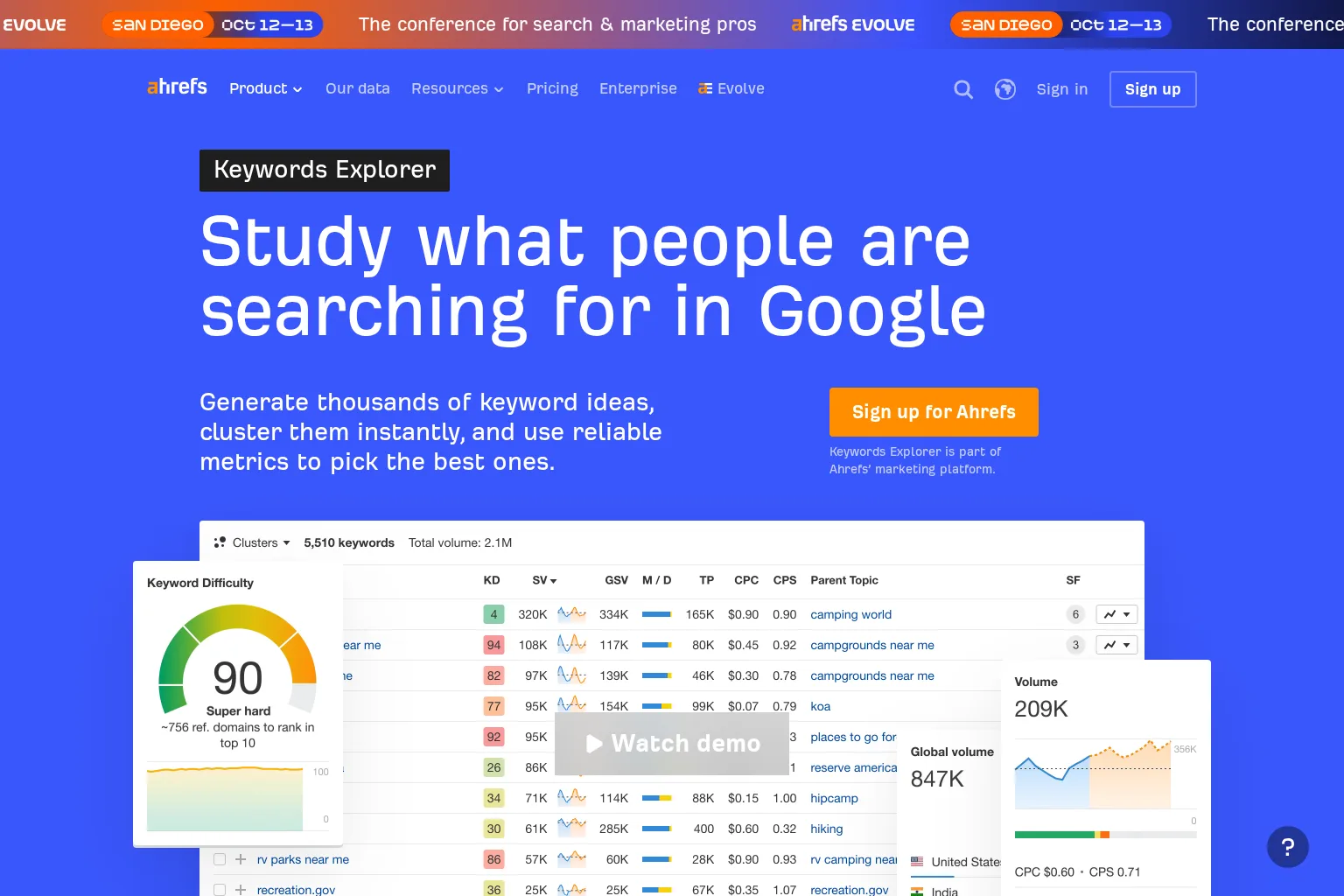
Keywords Explorer generates keyword ideas, clusters them by parent topic or related terms, and provides search volume, trend, traffic-potential, difficulty and SERP context. Ahrefs also offers AI-assisted idea generation, search-intent analysis, keyword lists and historical ranking views, so analysts can investigate a topic before deciding whether it deserves a page.
This is valuable when the quality of the decision depends on understanding why pages rank, not just sorting a list by volume. We recommend using its clusters as a starting point, then mapping the selected themes to the pages and offers your site can genuinely support.
Limitations
Ahrefs can accelerate discovery and analysis, but a growth team should still define how shortlisted themes become briefs, editorial commitments and refresh decisions. If you need one workflow from prioritisation through publishing, validate the operational handoffs before standardising on it.
Pricing approach
Ahrefs uses tiered subscriptions and usage limits. Its pricing page lists a $29 per month Starter plan and a $129 per month Lite plan, with access and limits varying by plan. Review the current plan page for tracked-keyword, historical-data and user allowances that match your workflow.
Who should choose it
Choose Ahrefs if your team has SEO capability in-house and values deep keyword, competitor and SERP investigation before it commits production resources.
4. Machined
Best use case
Machined is best suited to teams that want keyword discovery and intent clustering to feed directly into a high-volume content-cluster workflow.
Key capabilities
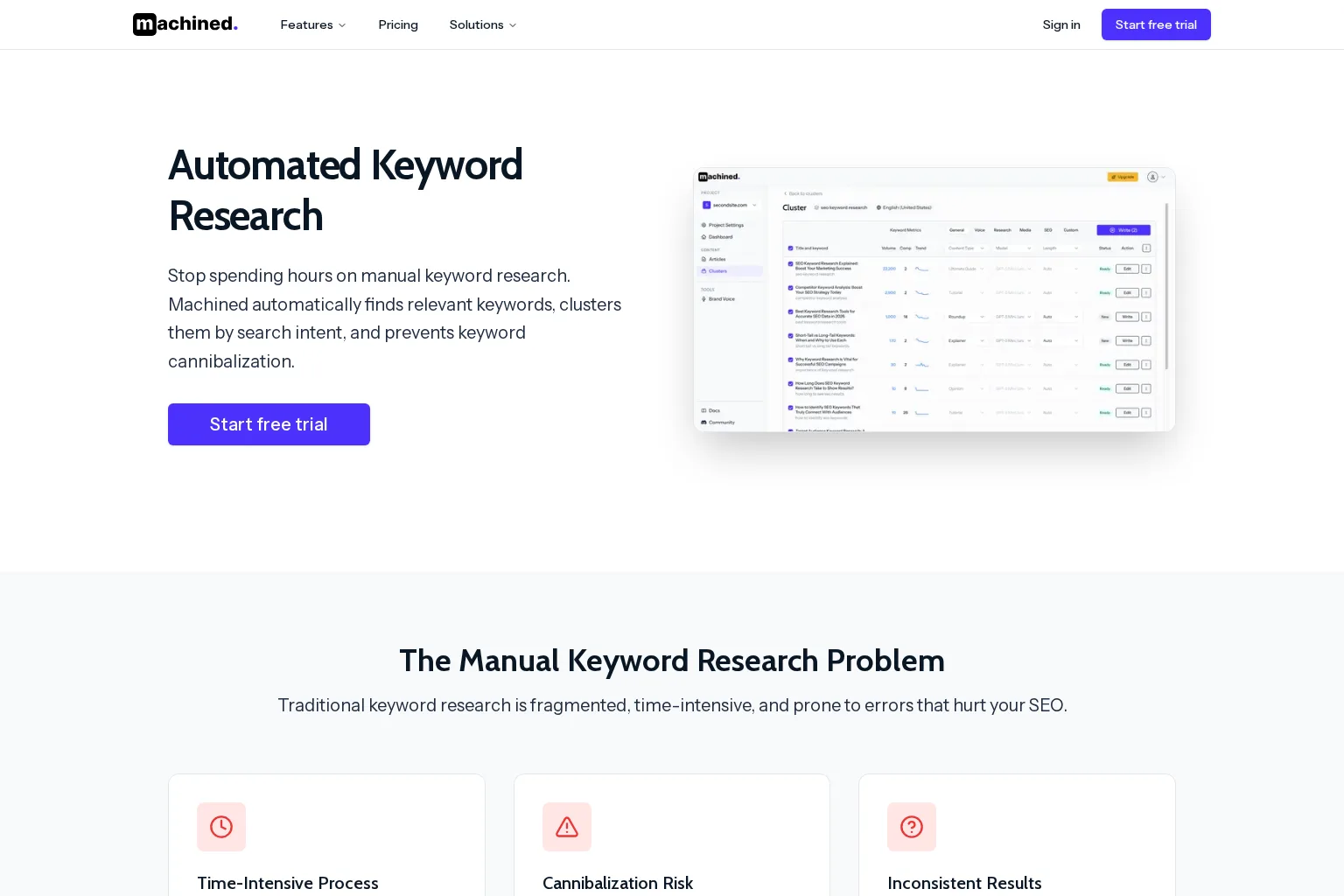
Machined says it automatically finds related keywords, clusters them by search intent and helps prevent keyword cannibalisation. Its workflow is designed to take a topic and audience, collect related terms and their volume, difficulty and trends, group them into pillar and supporting articles, then feed that structure into writing.
That direct path can be useful when the bottleneck is turning clusters into production. It is especially relevant for teams creating a substantial number of supporting articles around a defined topic area.
Limitations
Before choosing a production-oriented platform, confirm how it fits your quality controls, editorial review, source standards and publishing process. Also validate the data sources and refresh cadence required for your market and operating rhythm.
Pricing approach
Machined offers a 7-day trial. Its Launch plan is listed at $19 per month for 30 articles per month, while its Growth plan is listed at $49 per month for 100 articles per month. Higher tiers increase output and team capacity, so assess pricing against expected production volume rather than keyword research alone.
Who should choose it
Choose Machined if content-cluster production is central to your strategy and you need automatic clustering to reduce the manual work between research and drafting.
How to choose the right automated keyword research tool
Use this short decision process before purchasing:
- Define the unit of work. Are you buying keyword data, a research workspace, a content-cluster engine or an end-to-end organic workflow? A tool can be excellent at one without solving the others.
- Test with your own site. Use one existing topic, one competitor set and one target market. Compare the relevance of the ideas, not just the number returned.
- Check how priorities stay current. Ask what triggers a re-evaluation when rankings, competitors, demand or your published coverage changes.
- Trace the handoffs. Identify who validates intent, approves the topic, owns the brief and decides whether to refresh an older page.
- Price the complete workflow. Include analyst time, writers, rank tracking, content production, integrations and review. The lowest subscription price is not always the lowest operating cost.
For search that increasingly blends traditional results with AI answers, keyword decisions also need a visibility check beyond rankings. Our AI visibility checker can help you see whether ChatGPT and Gemini mention your business in a small, repeatable snapshot. It is not an overall ranking, and results can vary with wording, location and time.
Frequently asked questions
What is automated keyword research?
Automated keyword research uses software to expand keyword ideas, enrich them with metrics, identify intent or topic relationships, and organise the output for prioritisation. The best systems reduce repetitive collection and sorting while keeping human judgement on relevance, quality and business fit.
Can automated keyword research replace an SEO strategist?
No. Automation can speed up discovery, clustering and monitoring, but it cannot decide whether your business can credibly satisfy an intent, whether a page supports your commercial goals or whether the content meets your quality standard.
What should an automated keyword research tool track?
At a minimum, track the opportunity source, target market, search intent, difficulty or competitive context, the mapped page, the decision owner and the publication or refresh status. This prevents research from becoming a disconnected list of terms.
Is keyword volume enough to prioritise a topic?
No. Search volume is one signal. Consider relevance, intent, existing coverage, competitive context, the resources needed to make a useful page and how the topic supports the wider customer journey.
Which tool is best for continuous SEO automation?
For continuous SEO automation, favour a platform that connects opportunity discovery with a prioritised plan, ownership and a reviewable route to publishing. GrowthScout is designed for that connected workflow, while Semrush, Ahrefs and Machined may be better choices when your primary need is broader data, deeper SERP analysis or content-cluster production.
Turn research into a plan your team can run
A tool becomes valuable when it helps your team make fewer, better decisions repeatedly. Start with a real workflow test, establish review points and choose the level of automation your team can support with confidence.
If you want research, planning, writing and publishing to stay connected to your website context, start a 3-day GrowthScout trial. You can create three articles during the trial and cancel before it ends without being charged.