
5 Best Backlink Management Tools for SEO Agencies in 2026
A backlink management tool gives an agency one operational record for prospects, partners, placements, link status, follow-up history, and client reporting. The right choice depends on where your workflow is breaking: relationship management, scalable outreach, technical link checks, or proof of delivery.
Our quick answer: choose BacklinkManager for dedicated agency link CRM and reporting, BacklinkCRM for managing link exchanges and partner balances, Pitchbox for high-volume prospecting and outreach, BuzzStream for relationship-led outreach and digital PR, and LinkBox for detailed backlink checks, indexing, and anchor analysis.
We selected these tools using the same criteria: agency and multi-client fit, prospect and partner workflow, link-status monitoring, reporting, integrations, and publicly stated pricing or usage-based costs. We also separated outreach-first platforms from monitoring-first products, because an agency rarely needs the same system for both jobs.
Table of contents
- Quick fit guide
- What to look for in a backlink management tool
- 1. BacklinkManager
- 2. BacklinkCRM
- 3. Pitchbox
- 4. BuzzStream
- 5. LinkBox
- How to choose between these tools
- Use backlink management alongside your content workflow
- Frequently asked questions
- Final recommendation
Quick fit guide
- Choose BacklinkManager when clients, vendors, targets, partnerships, live-link status, and scheduled reports need to sit in one link-building CRM.
- Choose BacklinkCRM when reciprocal links, guest-post deals, barter arrangements, and link-exchange balances are central to delivery.
- Choose Pitchbox when prospecting, mailboxes, email deliverability, workflow controls, and white-label reports need to scale together.
- Choose BuzzStream when your team prioritises building and reusing publisher relationships through thoughtful outreach and digital PR.
- Choose LinkBox when you need granular monitoring of link presence, response codes, indexing, anchors, and campaign-level checks.
What to look for in a backlink management tool
Before committing to a platform, map the journey of one placement from prospect to client report. Your system should make it clear who owns the next step, what has been promised, whether the link is still live, and how that work contributes to the client’s agreed goal.
Prioritise these capabilities:
- Relationship history: contact details, deal notes, previous placements, agreed terms, and a clear owner.
- Pipeline control: consistent stages for prospecting, qualification, outreach, negotiation, content, placement, verification, and recovery.
- Monitoring: checks for a removed link, a changed follow attribute, a broken source page, or an incorrect target URL.
- Client visibility: exportable or shareable reports that separate activity metrics from verified live links.
- Data boundaries: client workspaces, permissions, email-account controls, and an audit trail where several specialists touch the same campaign.
A backlink database alone is not enough. If prospects, replies, placement terms, and live-link checks live in different tools, define the source of truth for each field and agree how your team will update it.
1. BacklinkManager
BacklinkManager is the best fit for agencies that want a dedicated link-building CRM without making email outreach the centre of the product. Its public feature set brings together client, partner, vendor, target, backlink-monitoring, dashboard, and reporting workflows.
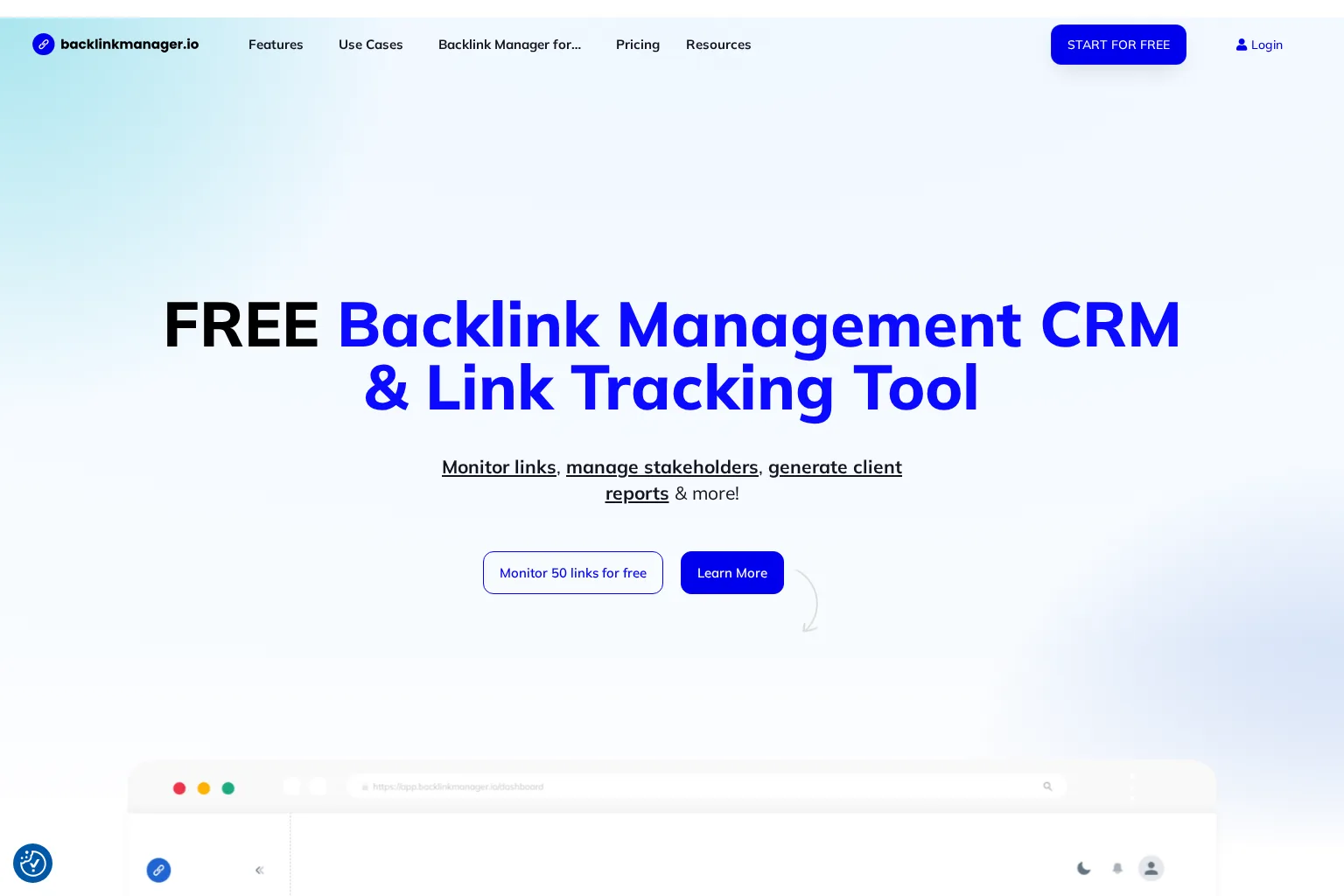
Best for: Agencies managing ongoing link partnerships and needing a clear view of what was built for each client, target, and partner.
Key capabilities:
- Tracks backlink status changes including follow status, missing links, and unavailable pages.
- Organises link-building clients, partners, vendors, targets, and partnerships in one CRM.
- Supports shared link-exchange target sheets and partnership scorekeeping.
- Creates reports and dashboards that can be shared with clients or partners.
Limitations: Its public product pages focus on link records, partnership management, monitoring, and reporting. Agencies that require a full prospect-discovery database, advanced email sequencing, and mailbox deliverability controls should compare it with an outreach-first platform such as Pitchbox or BuzzStream.
Pricing approach: BacklinkManager publishes tiered plans based on managed backlinks, users, targets, partnerships, clients, dashboards, and reports. Its pricing page lists annual-billing plans starting at $39 per month, with larger agency and enterprise tiers.
Who should choose it: Choose BacklinkManager if your team’s immediate priority is replacing partner spreadsheets with a structured CRM, then proving link activity and live-link status to clients.
2. BacklinkCRM
BacklinkCRM is a focused option for agencies that manage many link exchanges, guest-post arrangements, and partner commitments. Its workflow is built around recording the exchange, tracking each side of the agreement, and monitoring whether the placement remains live.
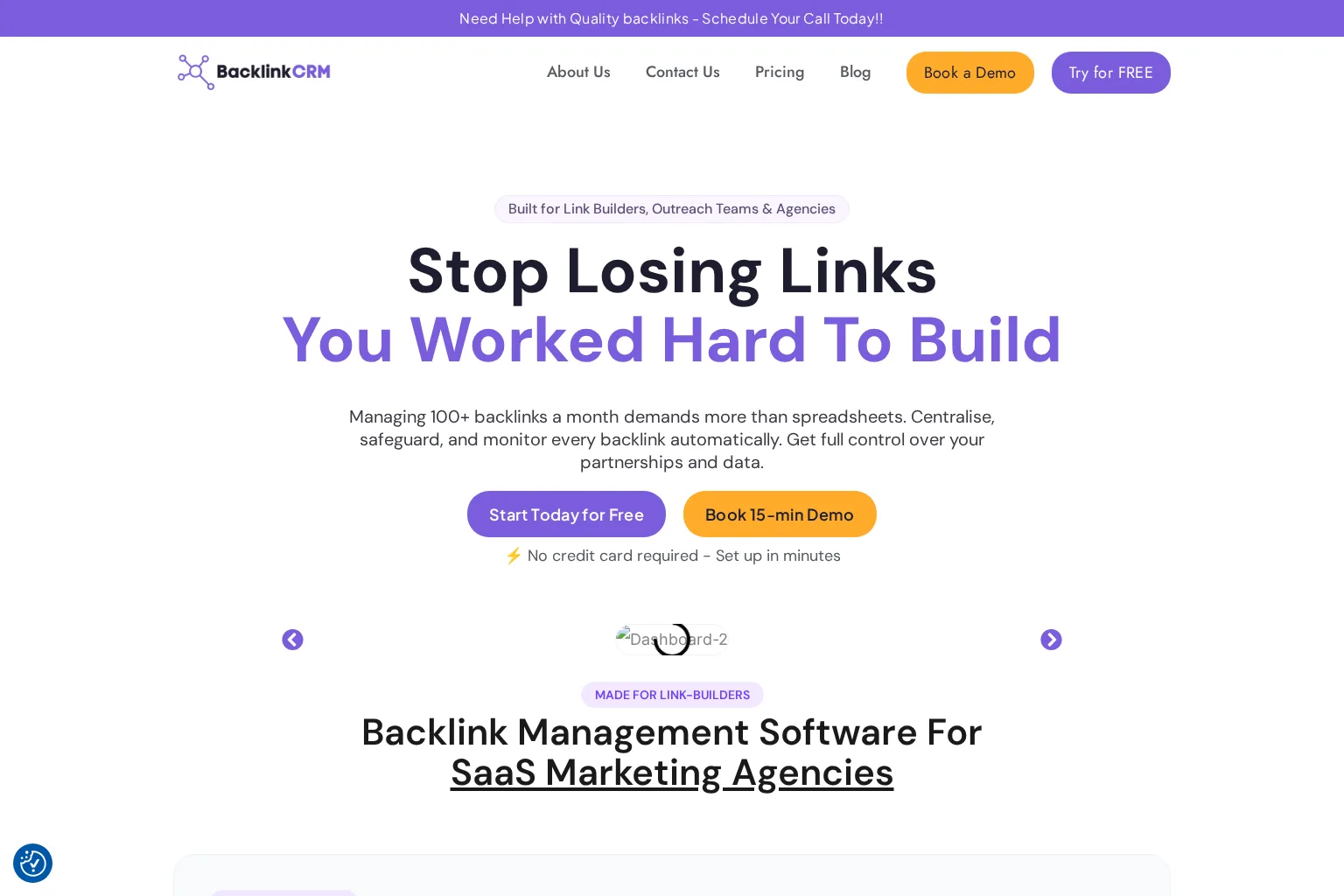
Best for: SaaS-focused agencies and link builders who need disciplined management of two-way, three-way, paid, barter, or guest-post link arrangements.
Key capabilities:
- Centralises partnership records, partners, clients, and link status.
- Supports link-exchange tracking and filters for deal type and delivery stage.
- Monitors backlink changes, including removed, nofollow, broken, and unreachable links.
- Offers bulk imports and exports, a backlink evaluator, and Ahrefs integration on selected plans.
Limitations: The product’s public messaging is tightly oriented around backlink partnerships and exchange accountability. If your agency’s main constraint is building large prospect lists and running sophisticated outbound sequences, trial an outreach-first platform alongside it.
Pricing approach: BacklinkCRM has a free plan for up to 100 partnerships, plus paid tiers. The published monthly plans start at $9, while annual billing shows lower effective monthly pricing. Higher tiers raise partnership, partner, user, and integration allowances.
Who should choose it: Choose BacklinkCRM when partnership balance, exchange terms, and verification of delivered links matter more than a broad digital-PR outreach stack.
3. Pitchbox
Pitchbox is the strongest fit here for agencies with a high-volume, process-driven outreach operation. It combines prospecting, contact discovery, email sequencing, a link-building CRM, delivery controls, link monitoring, and agency reporting in one platform.
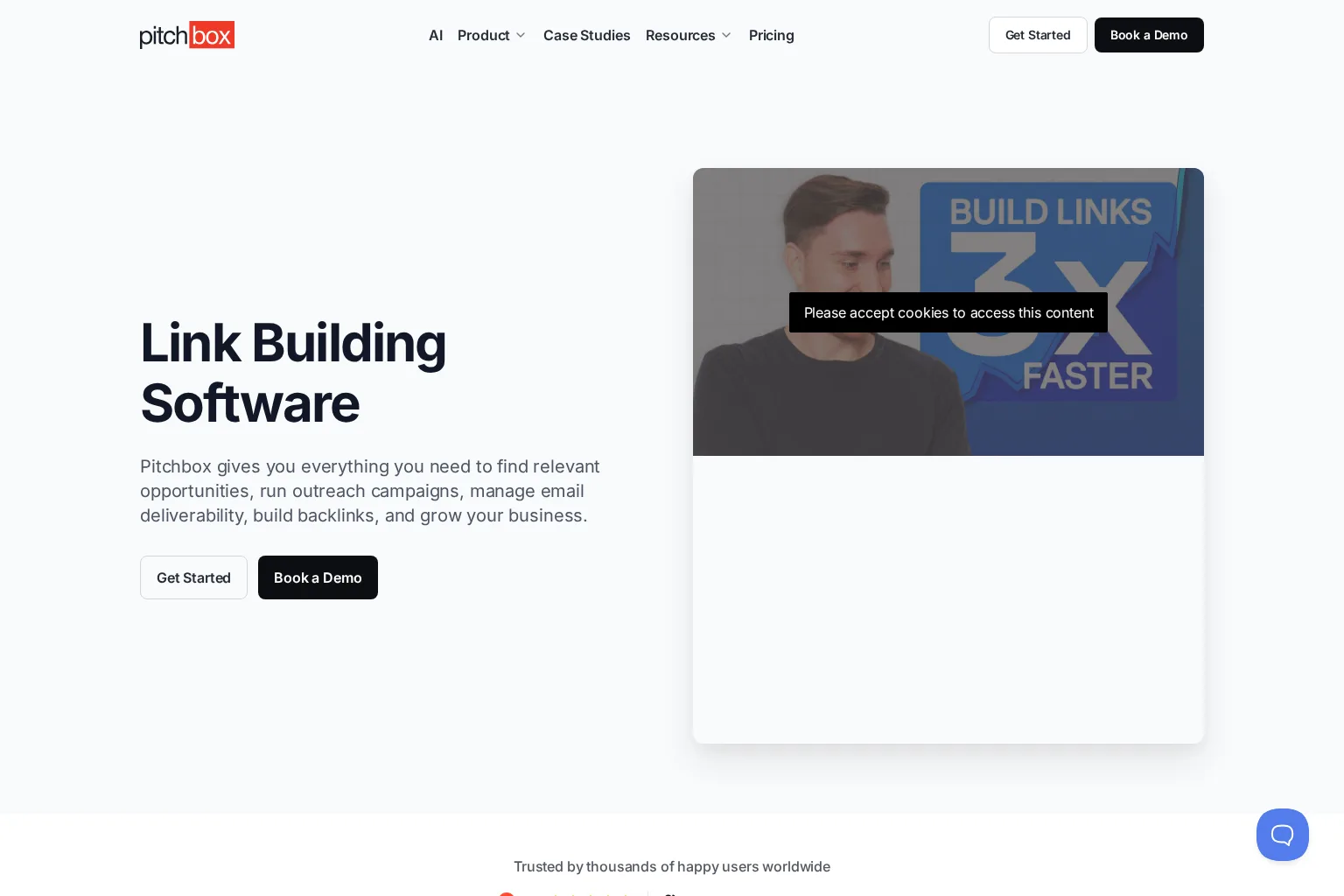
Best for: Established agencies with multiple client workspaces, several outreach specialists, and enough volume to benefit from structured prospecting and mailbox operations.
Key capabilities:
- Finds prospects through SERP-based methods, topic searches, imports, and SEO-tool integrations.
- Provides contact discovery, verification, email sequencing, and personalised outreach workflows.
- Maintains opportunity data, tasks, notes, conversations, prospects, and team actions in an SEO-focused CRM.
- Offers link monitoring, performance reporting, permission controls, and white-label reports on eligible plans.
Limitations: Pitchbox is designed for operational scale, and its plan structure reflects that. It can be more than a small agency needs when campaigns are low-volume or when the core task is only monitoring existing placements.
Pricing approach: Pitchbox publishes monthly and annual billing options with a one-year commitment. Its Pro plan is listed at $300 per month on monthly billing or $210 per month when billed annually, while agency-focused tiers add more workspaces, mailboxes, outreach capacity, permissions, reports, and API access.
Who should choose it: Choose Pitchbox if outreach throughput, deliverability, specialist roles, and multi-client reporting are the operational bottlenecks you need to solve.
4. BuzzStream
BuzzStream is a relationship-led outreach platform that works well when link building overlaps with content promotion and digital PR. It helps teams research contacts, manage conversations, coordinate follow-ups, monitor links, and measure campaign activity without losing the context of previous interactions.
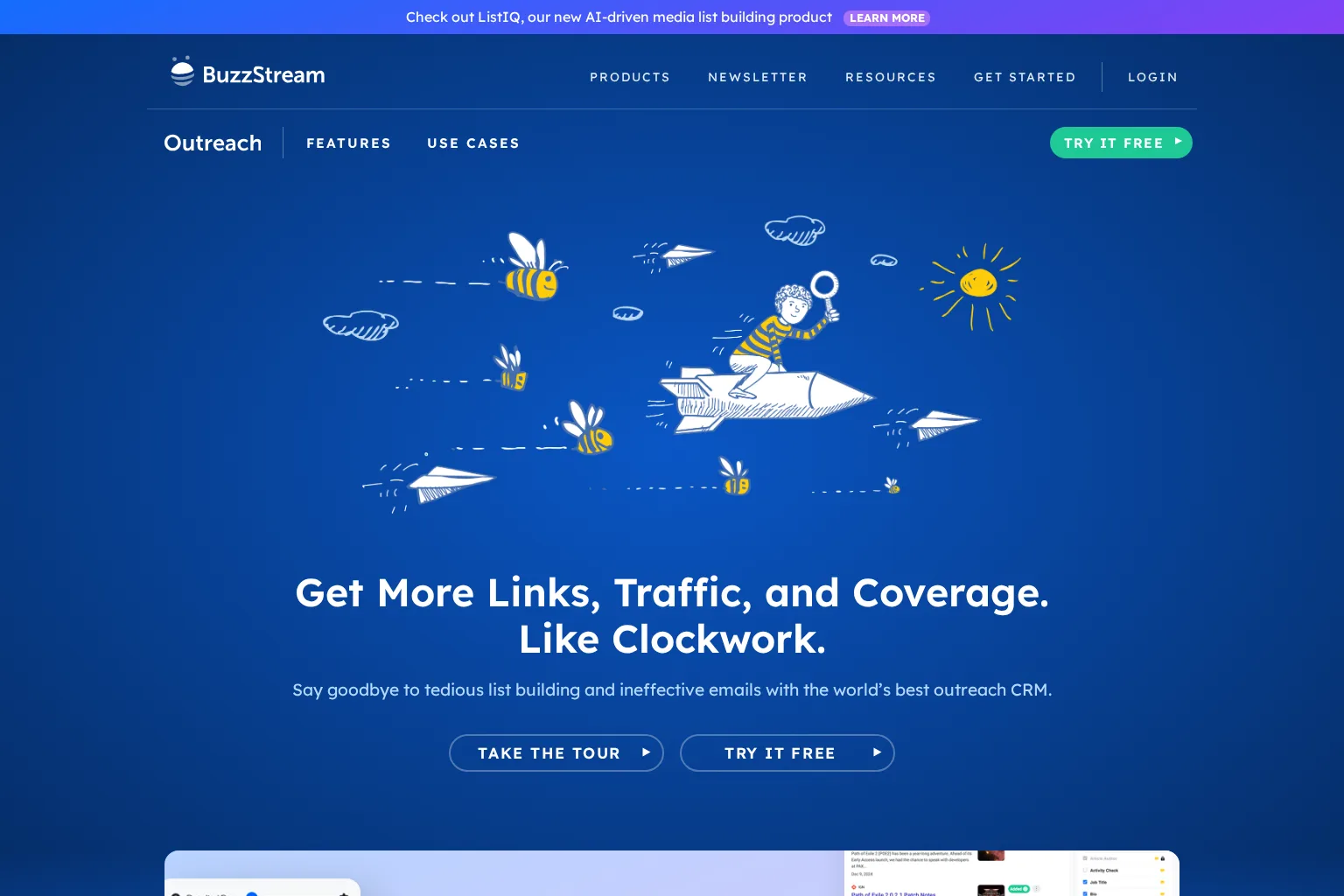
Best for: Agencies that value repeat publisher relationships, personalised outreach, and digital-PR-style campaigns alongside traditional link acquisition.
Key capabilities:
- Builds and manages prospect and contact lists with contact discovery and publisher metrics.
- Tracks opens, clicks, replies, templates, follow-ups, and outreach performance.
- Supports team sharing, permissions, project reporting, link reporting, and Ahrefs integration on higher plans.
- Includes link monitoring allowances that grow with the plan.
Limitations: BuzzStream is an outreach CRM first. Agencies that need deep campaign-level checking of indexing, response codes, and anchor distributions may pair it with a specialist monitoring platform.
Pricing approach: BuzzStream publishes monthly plans based on users, contacts, prospecting searches, and link-monitoring capacity. The current listed plans start at $49 per month for Starter, with Growth at $174 per month and Professional at $424 per month.
Who should choose it: Choose BuzzStream if your team wins links by building useful editorial relationships and needs outreach activity, contact history, and campaign outcomes in one place.
5. LinkBox
LinkBox is best viewed as a monitoring and link-data control layer. It is built for agencies that need to check the technical condition of links across campaigns, inspect anchor distributions, and schedule recurring verification tasks.
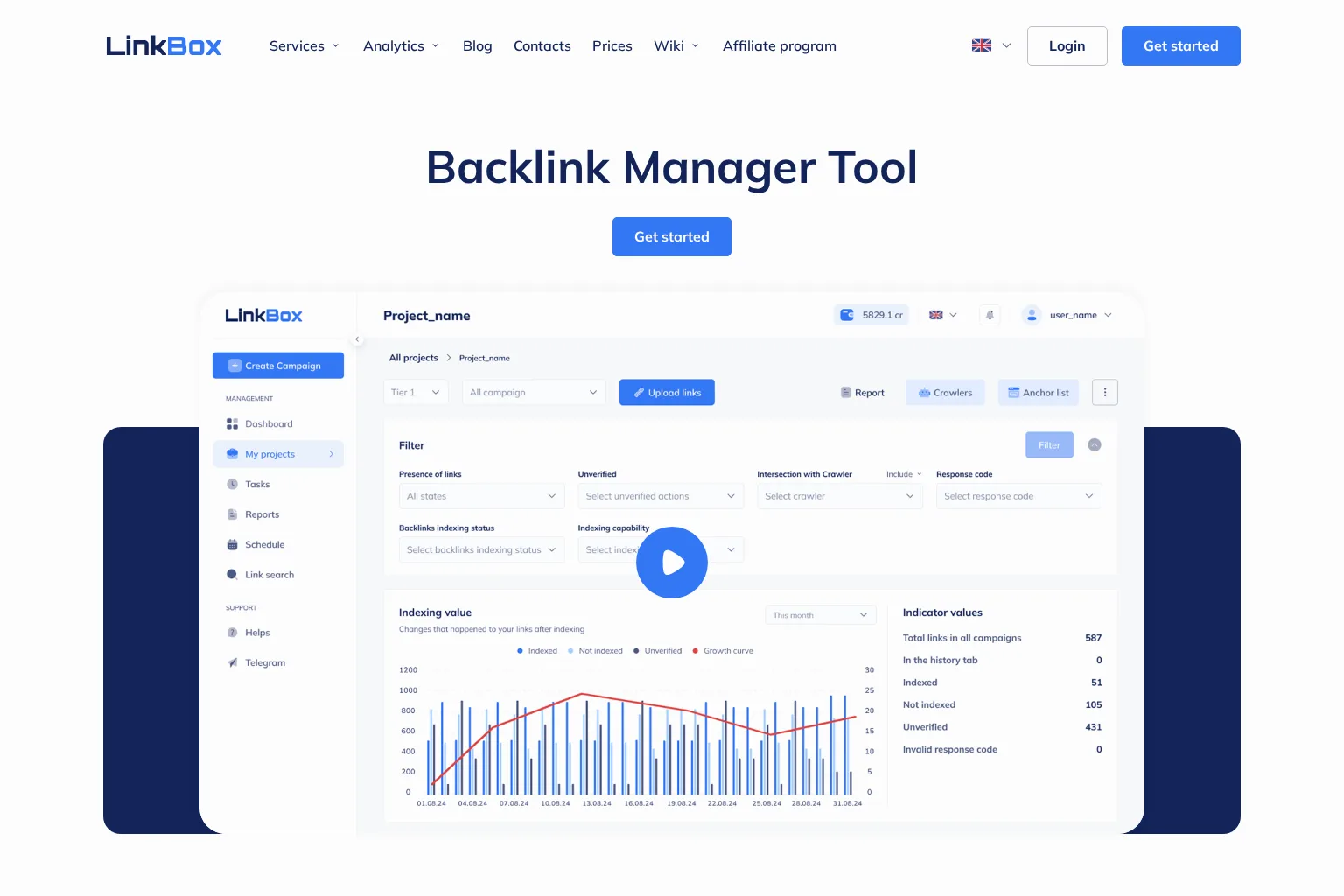
Best for: SEO teams that need detailed checks on known backlinks, including presence, response codes, indexing, anchor text, and campaign history.
Key capabilities:
- Organises backlink data by donor domains, donor pages, campaigns, and imported crawler sources.
- Filters links by presence, verification state, crawler source, response code, and index status.
- Analyses anchor text with campaign, link-type, index-status, and follow-attribute views.
- Schedules recurring link and indexing checks for campaigns and supports credit-based use of individual checks.
Limitations: LinkBox’s public backlink-management workflow centres on technical link data, monitoring, and indexing. It is not the primary choice when your agency needs a contact CRM, deal history, or a comprehensive email outreach system.
Pricing approach: LinkBox presents credit-based pricing for individual actions, such as link checks, index checks, and URL submission, rather than only a conventional per-seat subscription. Its homepage states that registration includes test credits, and costs vary by the type of check.
Who should choose it: Choose LinkBox if your link operation already has an outreach process but needs a more rigorous system for validating what remains live, indexed, correctly attributed, and technically healthy.
How to choose between these tools
Use the workflow you already have, rather than a feature checklist, to narrow the field.
- Start with the failure point. Missed follow-ups point to Pitchbox or BuzzStream. Lost exchange commitments point to BacklinkCRM or BacklinkManager. Incomplete technical verification points to LinkBox.
- Decide whether a relationship is a record or a conversation. A partner CRM is useful for deal history and balances. An outreach CRM is better when email threads, contact research, and follow-up sequences determine results.
- Check how client work is separated. Review workspace limits, user permissions, reporting controls, and whether the team can prevent one client’s data entering another client’s campaign.
- Test the link-recovery workflow. Add a sample placement, change its status, assign a recovery task, and see whether the system produces a report your account manager can use.
- Price for operational capacity. Compare the limits that drive your workflow, including contacts, partnerships, mailboxes, workspaces, monitoring checks, reports, and user seats.
The most capable platform is not always the right first purchase. A small agency may gain more from a focused partnership CRM and a consistent operating procedure than from paying for enterprise-scale sequencing it does not yet use.
Use backlink management alongside your content workflow
A backlink management tool helps you keep the acquisition side of SEO accountable. It does not replace the planning system that decides which pages to create, refresh, promote, or connect to each client goal.
That is where we see a complementary role for GrowthScout’s agency workflow. We keep each client website’s context, opportunities, content plan, article settings, and publishing workflow separate, so your team can plan the assets that outreach will eventually support. Use our connected content-planning process to turn research into a visible publishing calendar, then use your chosen backlink platform to manage relationship and placement delivery.
For a broader view of how your clients appear in AI-assisted discovery, run a free AI visibility check. When you are ready to establish a repeatable research-to-publication process across client sites, start a GrowthScout trial.
Frequently asked questions
What is the best backlink management tool for an SEO agency?
BacklinkManager is a strong choice for a dedicated agency CRM covering partnerships, monitoring, and reporting. Pitchbox is better suited to high-volume outreach operations, while BacklinkCRM is a closer fit for agencies built around link exchanges. The best choice depends on the stage where your workflow loses control.
Do we need separate tools for outreach and backlink monitoring?
Not always. Pitchbox and BuzzStream combine outreach with link monitoring, while BacklinkManager and BacklinkCRM combine relationship records with placement status. A separate monitoring product such as LinkBox can make sense when technical verification needs to be more detailed than the outreach platform provides.
What should we report to link-building clients?
Report verified live placements, linking domains and pages, target URLs, anchor text, follow attributes, placement dates, lost-link recoveries, and campaign activity. Keep outreach volume separate from live links so clients can understand both the work completed and the verified result.
Can a backlink management tool replace an SEO suite?
Usually not. Dedicated backlink management tools focus on the records and workflows around links you are actively pursuing or have secured. Your agency may still use an SEO suite for broader research, competitor analysis, rank tracking, and site auditing.
Final recommendation
If we were choosing for a typical multi-client agency, we would start with the operating model rather than the brand. Pick BacklinkManager for link CRM and client reporting, BacklinkCRM for exchange-heavy workflows, Pitchbox for scaled outreach, BuzzStream for relationship-first digital PR, and LinkBox for detailed link verification.
Then document the workflow around the tool: required fields, ownership rules, stage definitions, quality checks, client-reporting cadence, and recovery process. That is how a backlink management tool becomes an agency system rather than another place to store links.