
Brand mention monitoring helps you find and interpret online conversations about your business, whether they appear in social posts, reviews, news coverage, forums, blogs or AI-generated answers. The right tool does more than count mentions: it shows the source, context, sentiment and urgency so your team can decide what to address, amplify or investigate.
For this comparison, we assessed tools against six practical criteria: source coverage, query controls, context and sentiment analysis, alerts, reporting and pricing clarity. We also separated conventional web and social monitoring from AI-answer visibility. They overlap, but they are not the same measurement.
Quick answer: Choose Brand24 when you need broad listening plus a separately priced AI-visibility layer. Choose BrandMentions for a focused web and social listening workflow with transparent entry pricing. Choose Mention for sales-led media monitoring with Boolean search and review coverage. Choose Sprout Social when monitoring must connect to an existing social publishing and engagement operation. Choose Talkwalker when multi-market intelligence, governance and AI-answer monitoring matter more than self-serve pricing.
Pricing and packaging were reviewed on vendors’ public pages on September 17, 2026. Confirm current terms, data access and source coverage before committing.
Table of contents
- What to evaluate before choosing a brand mention monitoring tool
- 1. Brand24
- 2. BrandMentions
- 3. Mention
- 4. Sprout Social
- 5. Talkwalker
- How to choose the right tool
- Brand mention monitoring and AI visibility are different jobs
- Frequently asked questions
- Turn monitoring insights into action
What to evaluate before choosing a brand mention monitoring tool
Do not start with a vendor list. Start with the conversations that matter to your business:
- Coverage: Which web, social, review, news, forum and video sources must be included?
- Precision: Can you track misspellings, products, campaigns, executives and competitors without pulling in unrelated results?
- Context: Can you quickly understand tone, topic, reach and the author or publication behind an alert?
- Workflow: Can the right people receive time-sensitive alerts, tag mentions and share reports?
- AI visibility: Does the tool test named prompts and AI systems, record the answers and identify cited sources?
- Commercial fit: Are pricing, seats, tracked queries, mention caps, history and add-ons clear enough to model your real cost?

A useful evaluation process treats a monitoring tool as a decision system, not an inbox. A small team may value fast alerts and easy triage. An agency may need client-ready reporting. A larger brand may need language coverage, governance and multiple markets. We recommend validating your actual brand query during a trial, including exclusions for common words and similarly named companies.
1. Brand24
Brand24 is best for marketing teams that want traditional brand listening across online sources and the option to add dedicated AI-answer visibility.
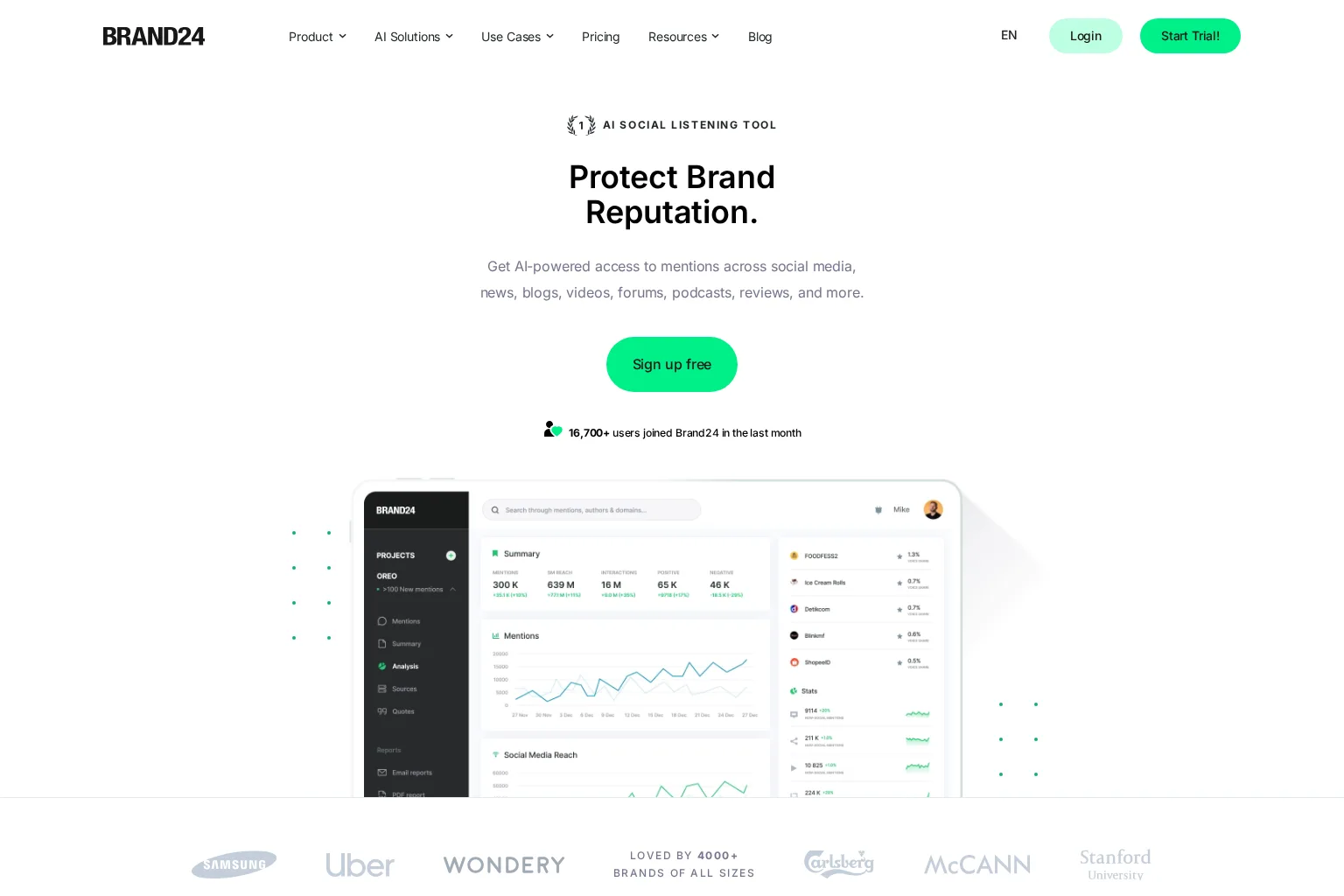
Best use case: A growing brand or agency that needs a practical view of social, news, blogs, forums, reviews and other online mention sources, with alerts and analysis in one workspace.
Key capabilities: Brand24 publishes source coverage across major social networks, news, blogs, reviews, podcasts and forums. Its plans include AI sentiment analysis, while higher tiers add real-time updates, event detection, advanced reports and more robust search tools. Its AI Visibility module is an add-on that monitors how a brand appears in AI-generated answers, tracks prompts and compares competitors.
Limitations: Mention and keyword allowances are tiered, so costs rise as your query set and volume grow. AI visibility is not included in the base subscription and should be assessed as a separate measurement layer.
Pricing approach: Public plans start at $249 per month for Individual, or $199 per month billed annually, for three keywords and 2,000 mentions per month. The AI Visibility add-on is listed at $99 per month on top of an active Brand24 subscription. A 14-day trial is advertised.
Choose Brand24 if: You need a credible bridge between brand monitoring and AI-search visibility, and you are comfortable managing base-plan limits plus an AI add-on.
2. BrandMentions
BrandMentions is best for teams that want straightforward web and social monitoring with real-time notifications, sentiment analysis and reporting.
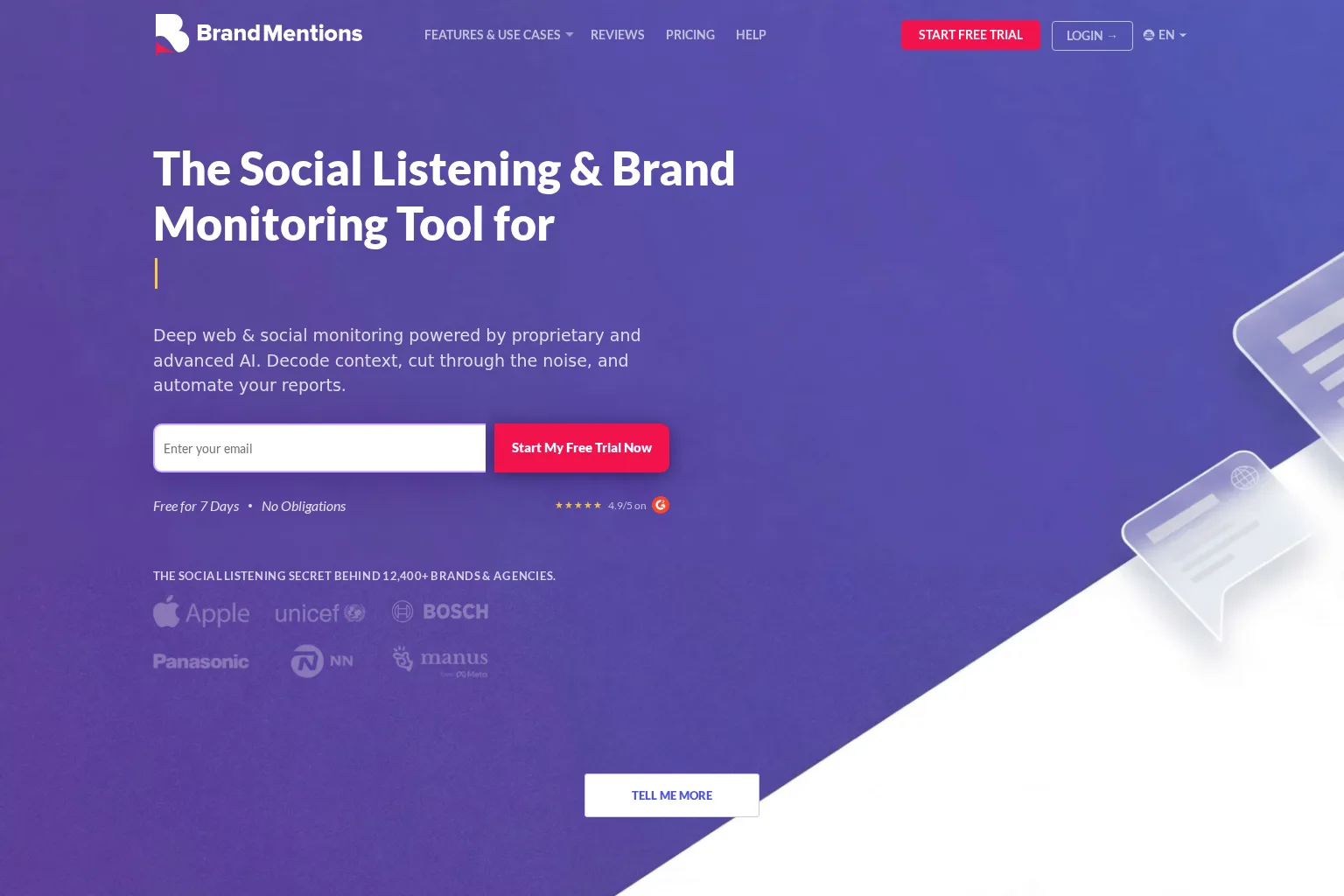
Best use case: A small business, SEO team or agency monitoring its own brand, client brands, competitor activity and fresh links without adopting a full social media management suite.
Key capabilities: BrandMentions describes coverage across web, social, news and forums. It provides sentiment analysis, real-time email notifications, fresh-link alerts, competitor tracking and report exports. Its positioning is particularly useful when unlinked mentions and earned coverage matter alongside social conversations.
Limitations: The public marketing page provides less detail on ongoing source-specific limits and feature entitlements than some enterprise platforms. Use the trial to validate the sources, languages, volume and reporting depth you need.
Pricing approach: BrandMentions advertises a seven-day trial, followed by $99 per month billed quarterly, or $297 plus applicable tax every three months.
Choose BrandMentions if: You need broad monitoring and quick notification workflows at a clearly stated entry price, particularly for reputation, outreach or competitive research.
3. Mention
Mention is best for teams that need media monitoring, detailed query construction and a more sales-assisted implementation.
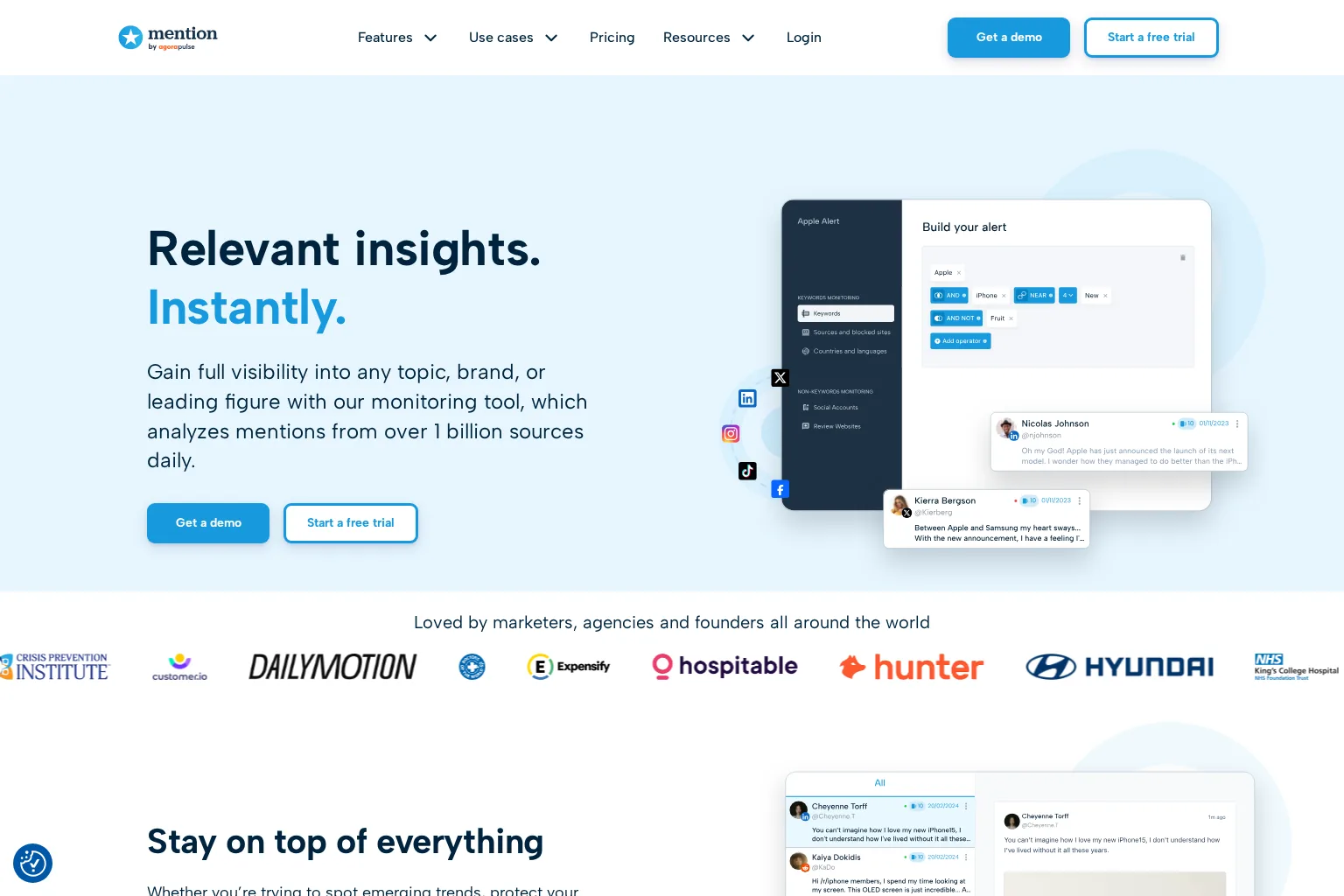
Best use case: Communications, PR and marketing teams that monitor a large mix of social conversations, web coverage, reviews and competitor topics.
Key capabilities: Mention supports real-time tracking across social platforms, web sources and review sites. Its Company Plan includes advanced Boolean search, sentiment and trend analysis, competitor benchmarking, share of voice, custom dashboards, reporting, team access controls and alerts. Historical data and API access are available as paid add-ons.
Limitations: Mention now focuses on monitoring and analysis. Its pricing page states that publishing and responding features are being deprecated, directing teams that need those workflows to Agorapulse. That makes it less suitable if you require monitoring, social publishing and community responses in one product.
Pricing approach: Mention currently presents one Company Plan and requests a demo. Its public pricing page shows yearly billing but does not display a numeric starting price, so get a quote that specifies query volume, history, add-ons and contract terms.
Choose Mention if: Your team values Boolean precision, multi-source monitoring and customised reporting more than a simple self-serve subscription.
4. Sprout Social
Sprout Social is best for social teams that need brand monitoring integrated with publishing, engagement, reviews and team workflows.
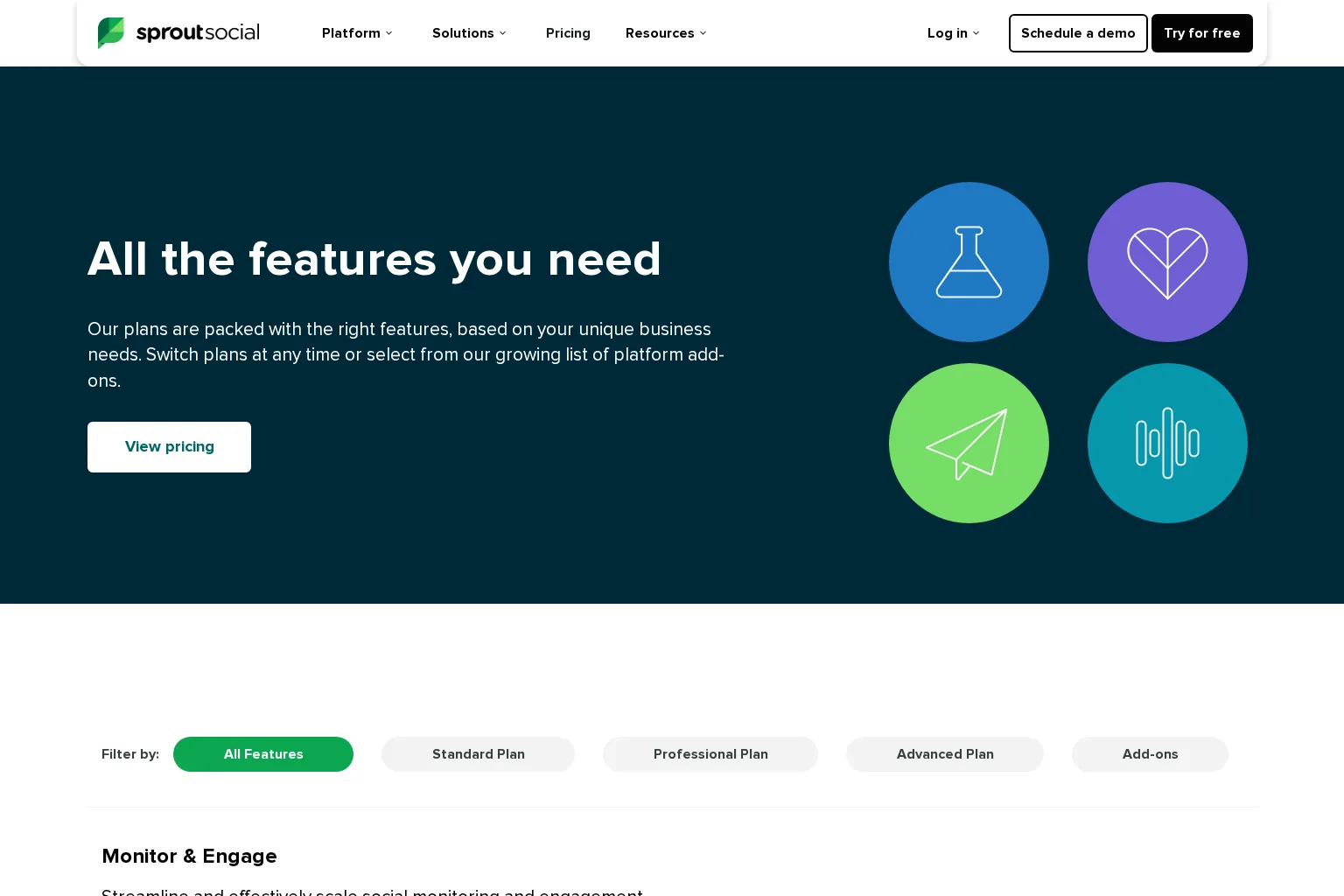
Best use case: An established social media operation that wants monitoring to inform publishing, customer care and reporting, rather than using a separate listening-only product.
Key capabilities: Standard plans include keyword and location monitoring, while Professional adds broader competitor and tag insights. Advanced includes sentiment in the Smart Inbox and Reviews plus message spike alerts. Sprout’s deeper Listening add-on adds AI-supported conversation analysis, sentiment tracking, machine-learning filters and spike alerts.
Limitations: The deeper social listening product is an add-on available from the Standard plan upward. Per-seat pricing and add-on costs can make the total harder to predict for larger monitoring teams, so obtain a full quote before comparing it with listening-first platforms.
Pricing approach: Essentials is listed at $79 per seat per month on annual billing, or $99 per seat per month billed monthly. Standard is $199 per seat per month, Professional is $299, and Advanced is $399, all on annual billing. Listening is separately quoted as an add-on.
Choose Sprout Social if: Social publishing, engagement and customer care already sit at the centre of your workflow, and you want monitoring signals inside the same operational system.
5. Talkwalker
Talkwalker is best for organisations that need multi-market consumer intelligence, deeper governance and AI-answer monitoring within a custom programme.
Best use case: Larger teams coordinating multiple brands, markets or regions that need broad listening, structured reporting and executive-ready insights.
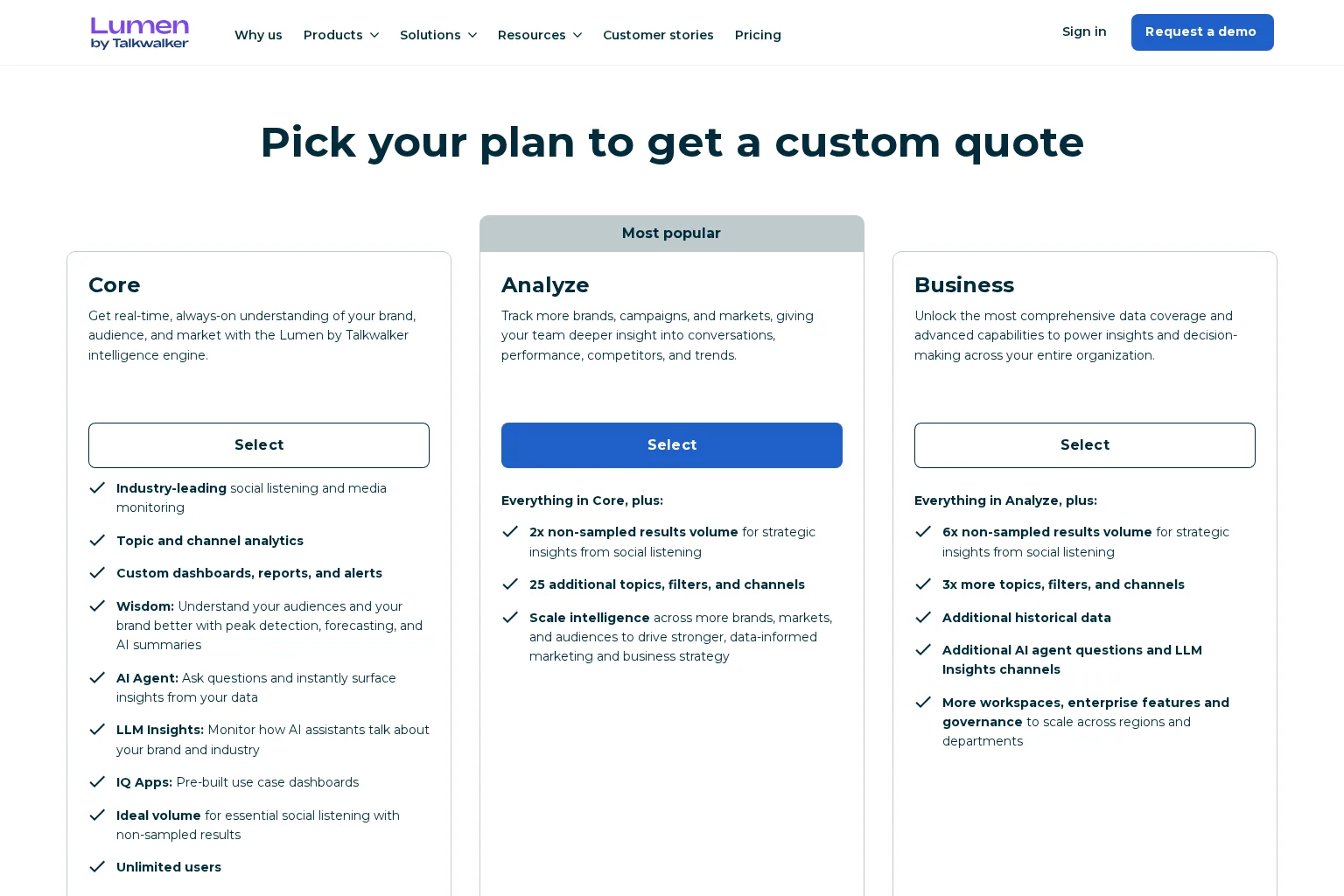
Key capabilities: Talkwalker’s Core plan includes social listening and media monitoring, topic and channel analytics, dashboards, reports and alerts. Higher plans add more topics, filters, channels, historical data and workspaces. Its LLM Insights feature is designed to monitor how AI assistants discuss a brand and industry, alongside its conventional listening capabilities.
Limitations: The product is sales-led and requires custom scoping. That can be appropriate for complex organisations but may be excessive when a small team only needs a handful of branded alerts.
Pricing approach: Talkwalker publishes Core, Analyze and Business plan structures but does not display public prices. All tiers lead to a custom quote and include unlimited users, onboarding and support.
Choose Talkwalker if: You need to coordinate high-volume, multi-market monitoring with dedicated support and want AI-assistant discussion included in the wider intelligence programme.
How to choose the right tool
Use this short decision guide after testing your real queries:
- Need web and social coverage plus AI-answer measurement: Start with Brand24, then assess its base plan and AI Visibility add-on together.
- Need a clear entry price for broad listening and alerts: Start with BrandMentions.
- Need PR-grade query logic, media monitoring and sales-assisted configuration: Evaluate Mention.
- Need monitoring connected to social publishing and customer engagement: Evaluate Sprout Social.
- Need global scale, governance and custom intelligence: Shortlist Talkwalker.
No monitoring product can promise complete coverage of every conversation. Platform access, privacy rules, query quality and language all affect what is captured. The most important test is whether a tool finds the mentions your team would otherwise miss, then delivers enough context for a timely action.
Brand mention monitoring and AI visibility are different jobs
A conventional monitoring platform looks for online pages and public conversations that match your tracked queries. AI visibility monitoring checks whether AI systems include, describe or recommend your brand in answers to a defined set of questions. Both are valuable, but a rise in one does not automatically mean a rise in the other.
For AI answers, consistency matters. Use a fixed set of commercial, comparison and problem-led prompts, record the exact wording, note which brands are named and inspect cited sources. AI answers can change by prompt wording, location, timing and personalisation, so treat each report as a repeatable sample rather than a universal ranking.
If you want a starting point, run an AI visibility check to see whether ChatGPT and Gemini mention your business in category-based questions and which sources they cite.
Frequently asked questions
What is brand mention monitoring?
Brand mention monitoring is the process of tracking online references to a business, product, campaign, person or competitor. Strong monitoring combines discovery with analysis, so teams can assess source, context, sentiment, urgency and possible next actions.
Is social listening the same as brand mention monitoring?
Not exactly. Monitoring usually focuses on detecting and responding to individual mentions. Social listening looks for wider patterns, themes and changes in conversation. Many platforms combine both, but you should confirm which data sources and analytical features are included in the plan you buy.
Can brand mention monitoring improve AI-search visibility?
It can reveal sources, narratives and unlinked mentions that may influence how your business is understood online. It does not prove how an AI system will answer a future prompt. Pair conventional monitoring with repeatable AI-answer checks when AI-driven discovery is a priority.
How often should we review brand mentions?
Use real-time alerts for reputation risks, customer issues, launches and active campaigns. For strategic analysis, review themes, sentiment shifts, competitor activity and source quality weekly or monthly, depending on your volume.
Turn monitoring insights into action
Monitoring is useful when it changes what your team does next. Turn recurring questions into clear content, correct inaccurate information at the source, thank advocates, prioritise earned-coverage opportunities and watch whether your brand appears in the conversations that shape decisions.
At GrowthScout, we help teams connect those findings to a more intentional content workflow. Explore GrowthScout to research opportunities, plan targeted content and build visibility across search and AI discovery.