
TL;DR
The best ChatGPT visibility tool depends on the question you need answered. Use GrowthScout's free checker for a small, inspectable sample; Ahrefs' free checker for a quick cross-platform preview; SE Ranking for recurring ChatGPT-focused tracking; and Peec AI for multi-engine analysis and content or citation opportunities. Before paying for any tracker, check its prompt sample, how it collects answers, what counts as a mention or citation, and whether you can inspect the underlying responses.
A brand appearing in one ChatGPT answer is interesting. It is not proof that every customer will see the same recommendation. ChatGPT can search the web, but search use and available source links depend on the answer; OpenAI also notes that location can shape local results. That makes a transparent sample more useful than an unexplained visibility score. OpenAI's ChatGPT search guide explains these behaviours.
This comparison is for businesses and agencies deciding whether to run an initial check or invest in ongoing measurement. I selected four publicly documented products that represent distinct buying choices: a transparent small-sample checker, a broad free preview, a dedicated ChatGPT tracker, and an ongoing multi-engine platform. I compared each on prompt and engine coverage, mentions versus citations, competitor and historical data, available actions, and purchasing approach. This is a comparison of published capabilities, not a hands-on accuracy test or an exhaustive market survey.
The UK search results inspected on September 25, 2026 included free checkers, dedicated ChatGPT trackers, and broader AI-search platforms. That mix is why I would not treat all four as interchangeable. A checker answers 'what happened in this sample?'; a recurring tracker can answer 'what changed across the prompts we monitor?'; a wider platform can put ChatGPT alongside other AI surfaces. None measures every possible conversation.
| Tool | Best starting point | What you can inspect | Main trade-off |
|---|---|---|---|
| GrowthScout AI visibility checker | A first check of your business in ChatGPT and Gemini | Three category questions per platform, answers, mentions and domain citations | A small one-time sample, not continuous monitoring |
| Ahrefs Free AI Visibility Checker | A quick brand-level, multi-platform preview | Mentions by platform, leading topics, cited domains and pages | The free preview is limited; full history and comparison belong to Brand Radar |
| SE Ranking ChatGPT Visibility Tracker | Tracking chosen ChatGPT questions over time | Answers, mentions, links, competitor presence and trends | Confirm the tracking allowance and plan terms for your workflow |
| Peec AI ChatGPT Visibility Tracker | Prompt-led analysis across clients or AI platforms | Mention trends, sources, competitor benchmarks and suggested actions | Coverage depends on your plan's prompt, model and project allocation |
Table of contents
- 1. GrowthScout AI visibility checker: best for an explainable first snapshot
- 2. Ahrefs Free AI Visibility Checker: best for a broad, low-friction preview
- 3. SE Ranking ChatGPT Visibility Tracker: best for recurring ChatGPT-focused monitoring
- 4. Peec AI ChatGPT Visibility Tracker: best for turning source gaps into work
- How to judge whether the measurements are trustworthy
- A practical trial for one business or several clients
- Frequently asked questions
- Sources
1. GrowthScout AI visibility checker: best for an explainable first snapshot
GrowthScout's free AI visibility checker asks three category-based questions once on each of the web versions of ChatGPT and Gemini. The business name and website are used to match the answers, not inserted into the questions. It asks ChatGPT to search the web; Gemini's search behaviour is controlled by Gemini's interface. This setup helps you see what was actually asked, rather than taking a single proprietary score on trust.
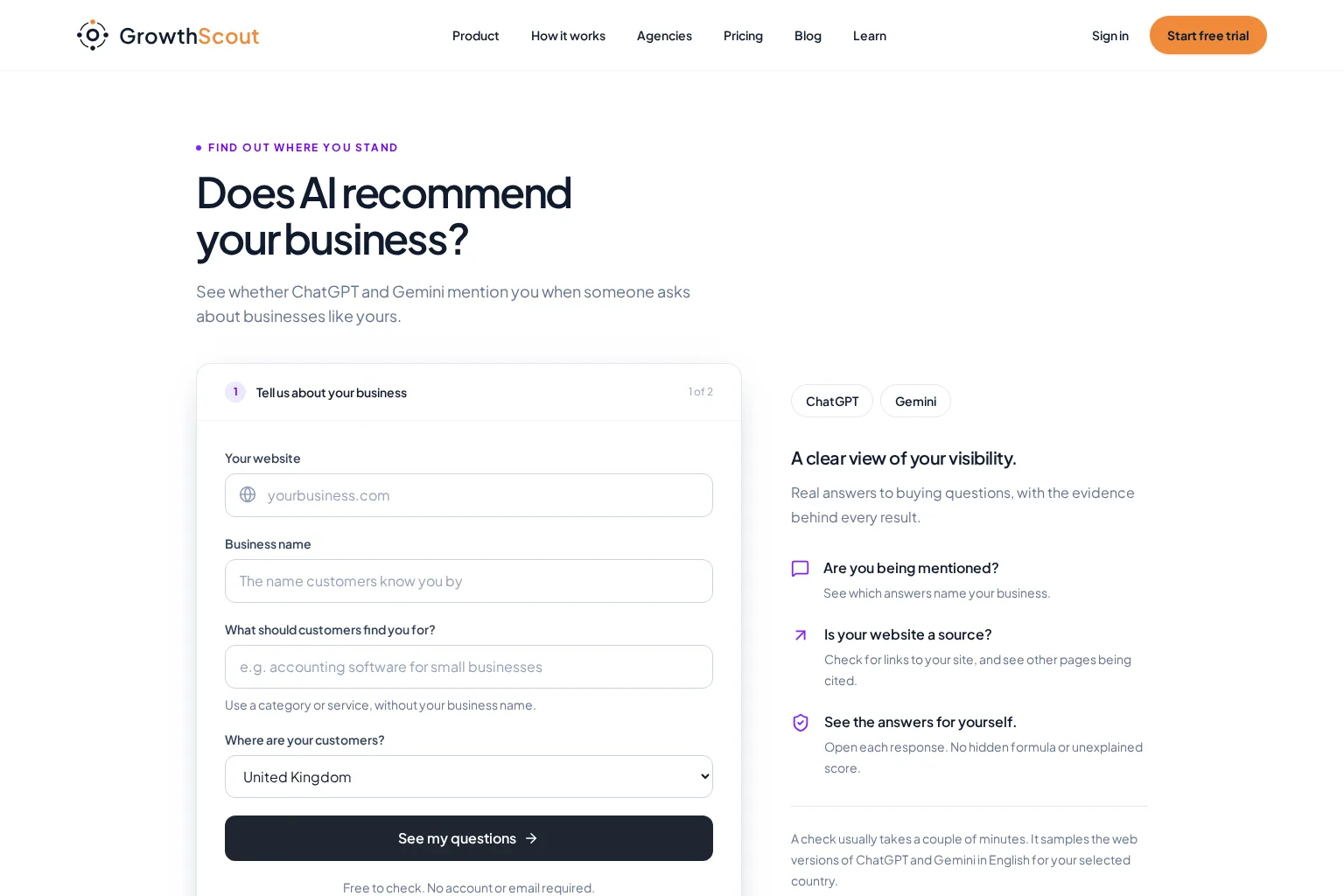
The check separates mentions, matched against the business name in answer text, from citations, matched against the website or its subdomains in returned sources. You can read the answers and source links. That distinction matters: an assistant may name a company without linking to its site, or cite a site without explicitly recommending the business. Common names can create ambiguous matches, and failed answers are excluded. Those limits are stated on the checker page.
Choose it if: You want a no-cost, small-sample starting point for a public business and prefer visible questions and responses over an opaque composite number. A UK service company, for example, could inspect which alternative suppliers appeared in a category answer and which sites ChatGPT linked to. That suggests what to investigate; it does not establish the frequency of real customer recommendations.
Know the limit: The first check is free, but it is not a free recurring tracker. Rechecking the same website shows its saved report; after 90 days, the result is flagged as old, and a paid plan is needed to run an updated report. Anyone with the share link can view the results, so only enter public business information. Its page explicitly warns that wording, time, location and personalisation can change the answer. Read the check and data terms before submitting a client's details.
2. Ahrefs Free AI Visibility Checker: best for a broad, low-friction preview
Ahrefs' Free AI Visibility Checker starts with a brand name and provides a limited preview spanning ChatGPT and other AI surfaces. Its published report includes total mentions, a platform breakdown, five leading topics, and five cited domains and pages. Ahrefs says it uses search-backed prompts and does not require signup for the free check. This is useful when your immediate question is whether a brand shows up beyond one assistant, rather than how a hand-picked prompt performed today.
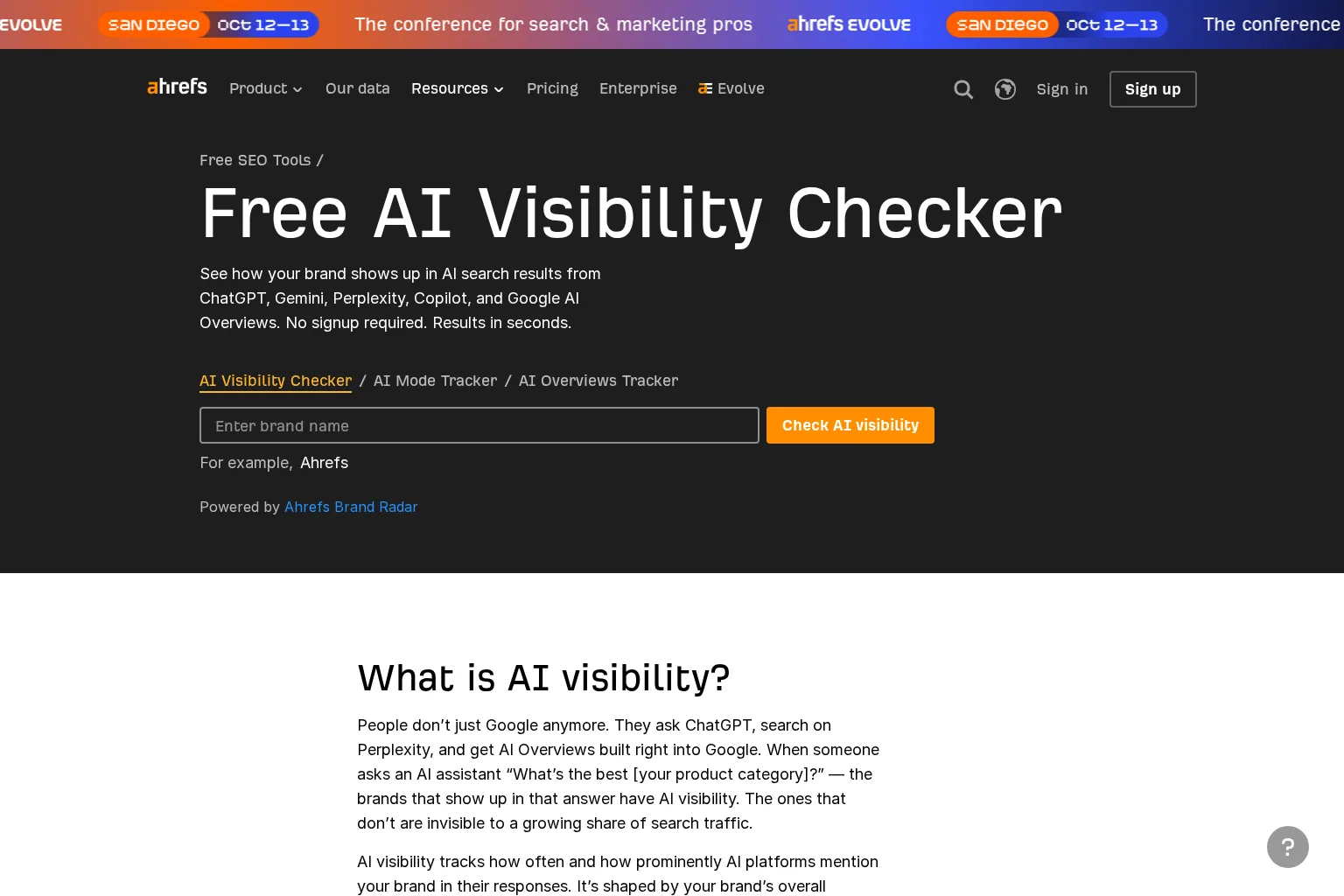
The distinction from GrowthScout's small live check is scope and selection. Ahrefs offers a cross-platform preview built around its prompt dataset; GrowthScout shows the individual questions used for its small check. Neither free product should be mistaken for a controlled, ongoing panel of your own buyer questions. When comparing the results, ask which prompts drove each mention, what market was sampled, and whether the citation points to your domain, an independent source, or a competitor. Ahrefs describes the free report's included fields on its checker page.
Choose it if: You need a fast orientation across AI surfaces before investing time in a custom prompt set. The topic and source previews can help you decide which product categories deserve a closer look.
Know the limit: The free view shows the top five results in several sections. Ahrefs places historical trends, competitor benchmarking, custom prompt tracking and fuller data in its separate paid Brand Radar product. Those are not capabilities I would assume you get from the free checker. The product page displays paid Brand Radar options, but check current scope and billing directly before comparing a subscription with a free preview. Ahrefs explains the split.
3. SE Ranking ChatGPT Visibility Tracker: best for recurring ChatGPT-focused monitoring
SE Ranking's ChatGPT Visibility Tracker is oriented around the target questions you choose to track. Its public page describes brand mentions, website links, the actual ChatGPT answers, competitor appearances, cited domains and URLs, historical trends, and country or language setup. That is a more useful shape of data when your team needs to review the same commercial questions repeatedly instead of refreshing a general brand snapshot.
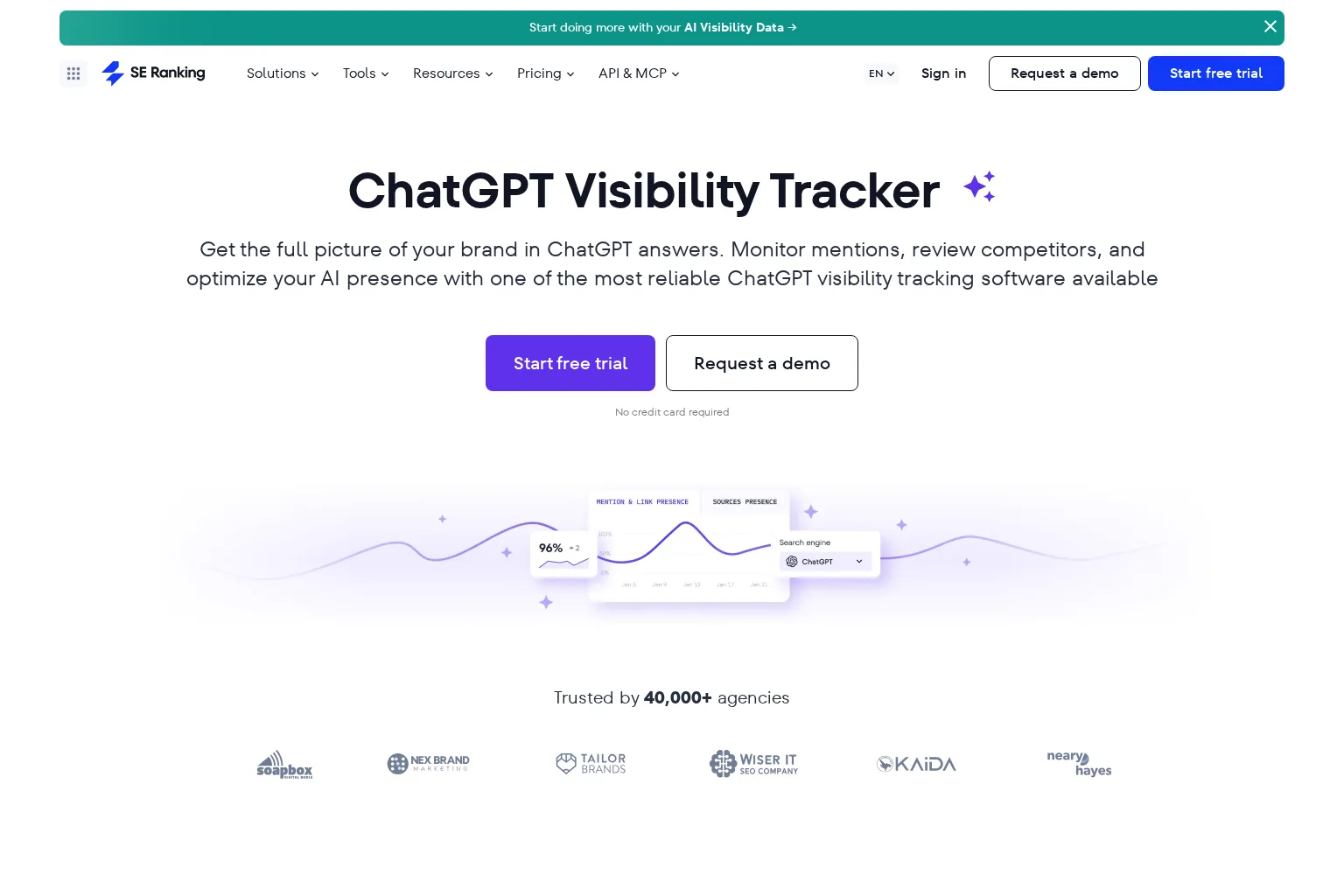
For example, compare 'best payroll software for small UK employers' with 'alternatives to [competitor] for a ten-person team'. The first tests category discovery; the second tests a comparison decision. If the answer cites a review site rather than your product page, you have a specific source to investigate. If a competitor appears but you do not, read the full response before calling it a content gap. The tool's feature description supports the availability of answer, source and competitor views; this example is a suggested evaluation method, not a reported result.
Choose it if: ChatGPT is the priority channel and your team already knows the questions and markets it wants to monitor. The page also describes API access and reporting connections, which may help agencies combine visibility observations with their existing client reporting.
Know the limit: A dedicated ChatGPT tracker does not automatically give you comparable data for every AI engine. SE Ranking discusses other AI products on the same page; verify which ones are included in the specific plan you would buy. Its page offers a free trial but does not establish a universal ongoing free tier or an all-inclusive price for this comparison. Request the prompt limits, check frequency, export availability and terms before committing.
4. Peec AI ChatGPT Visibility Tracker: best for turning source gaps into work
Peec AI's ChatGPT visibility tracker connects tracked brand mentions and competitor performance to sources and proposed actions. Its public description distinguishes opportunities involving owned content from those involving earned sources, such as relevant third-party pages. That is a meaningful difference if the person buying the platform is also expected to decide what to create, improve or pitch next.
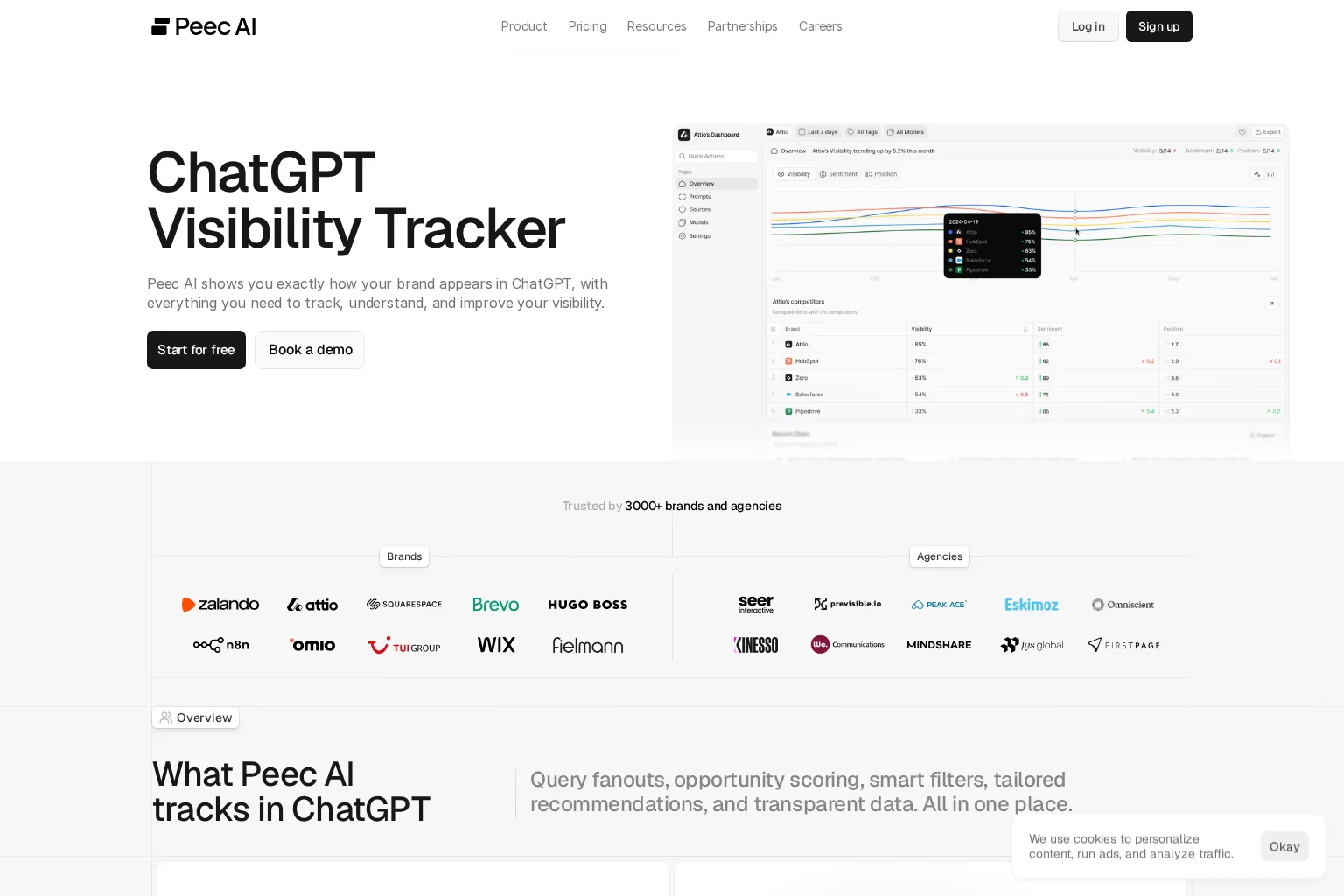
Peec says agencies can keep client accounts separate and inspect visibility, sentiment and cited sources per client. Its published brand-plan details describe daily tracking, defined prompt allowances, model selection and project limits that differ by tier. Those limits make a practical trial question unavoidable: can your allocation cover all important prompts, markets, clients and models without forcing you to drop decision-critical questions?
Choose it if: You need ongoing prompt-led analysis and want to connect a missing brand mention to a specific cited source or a content task. Look at whether its suggested action actually fits your market. A competitor's mention on an irrelevant forum, for instance, is not necessarily a useful outreach target. Peec's product description and pricing page describe its source and action features.
Know the limit: A wider feature set does not make every recommendation correct or every visibility score representative. Review the sampled answers and source URLs yourself. Peec publishes separate plan configurations, including brand and agency paths; verify the current prompt, model, project and billing terms for the account you would actually use. I would not infer an included feature or a price from a different tier.
How to judge whether the measurements are trustworthy
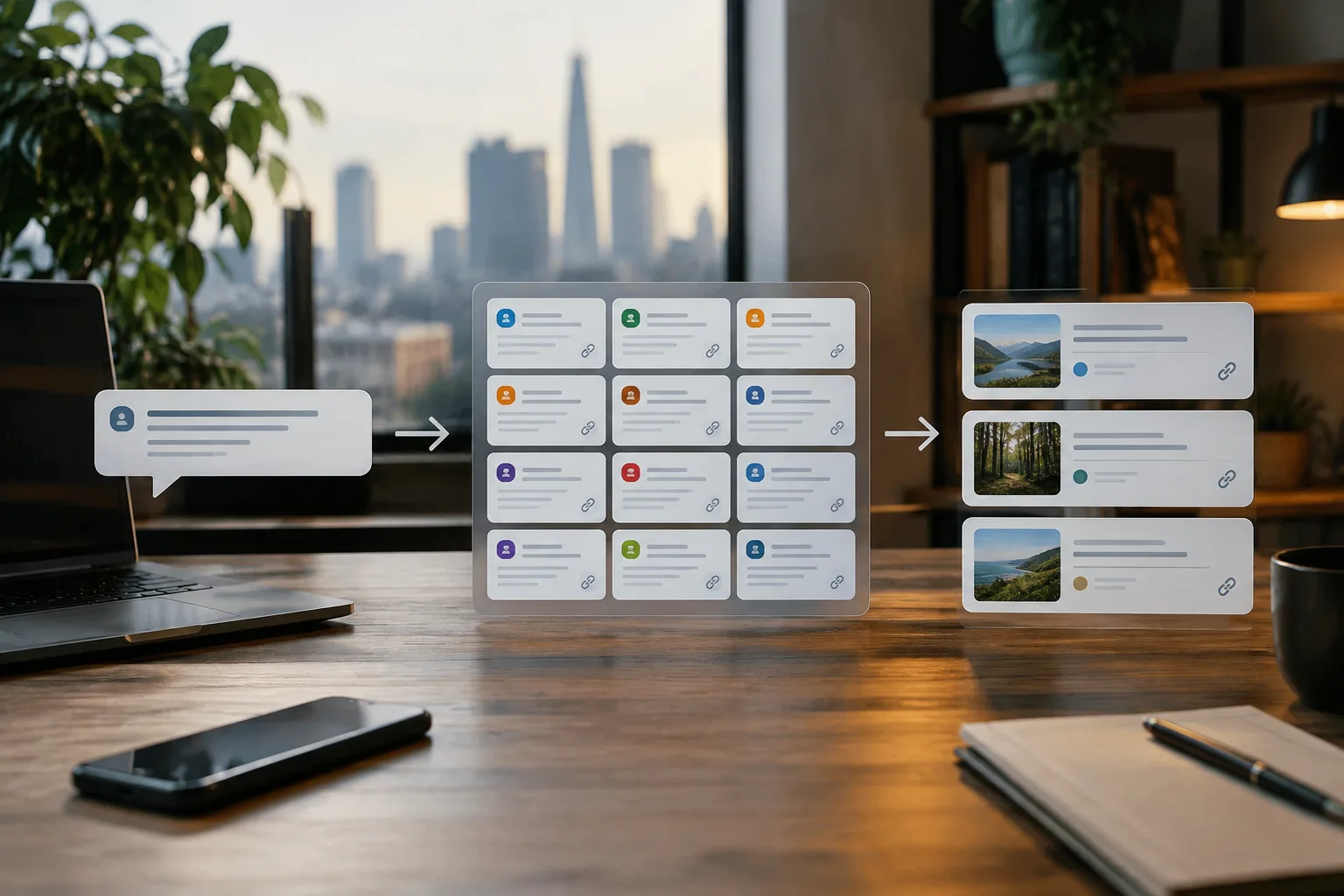
An AI visibility percentage is only interpretable when you know the denominator. 'Mentioned in 8 of 20 successful responses to 10 selected prompts' describes a sample; '40% visible' alone does not tell you which questions, repeat runs, places or response types it covers. Ask each vendor to explain how failed runs, duplicate mentions and ambiguous brand names are handled. Keep mention and citation rates separate, and check whether 'recommended' means more than simply being named.
I would use this short checklist in a trial:
- Prompts: Can I supply buyer questions, inspect any suggested prompts, and exclude branded questions that inflate apparent visibility? Do saved prompts map to distinct customer needs?
- Sampling: How many answers are collected per prompt and when? Can I see dates, the answer text, failures and past runs rather than only a changing score?
- Environment: Which ChatGPT interface or method is checked? Is web search requested or automatic? Are country, language and other settings visible and consistent?
- Evidence: Does the tool distinguish answer mentions from cited domains and URLs, and can I open the cited page? Can I correct mistaken name matches?
- Comparison: Are competitor brands measured against the same prompts, checks and markets as mine? Does the report show examples rather than only a leaderboard?
- Operations: Can I separate clients, control access, export relevant evidence, and fit the needed prompts and runs within the quoted plan?
OpenAI says ChatGPT may choose web search based on the question, that search responses may include citations, and that approximate or shared location can affect local results. Those details are reasons to record how a tool obtained an answer, not proof that any one vendor's measurement is wrong. See OpenAI's guide to ChatGPT search. A repeatable monitoring set reduces the temptation to generalise from one answer, but it remains a sample of selected questions rather than a census of all ChatGPT users.
A practical trial for one business or several clients
First, write down five to ten genuinely different buyer questions for each business. Include a category question, an alternatives question, a use-case question and, if relevant, a local question. Avoid slipping the brand name into every prompt: that tests recognition of your name more than discovery. Our guide to keywords and prompts explains why one search topic can correspond to several different customer questions and why keyword demand is not a count of ChatGPT conversations.
Next, run an initial checker and save the precise questions, answers, source links and date. For an agency, keep client brands and markets separate. Mark each observation as named, linked, competitor only, or neither, with a note for false matches or failed answers. If buying a recurring platform, add the same question set and confirm that its collection method and country settings make the baseline comparable. Do not merge two vendors' percentages as if their prompt samples were identical.
Then investigate two gaps you can actually act on. If your page is cited but the brand is not named, inspect how clearly the page identifies the business and answers the buyer's question. If competitors are named through a third-party source, check whether that source genuinely covers your category before proposing outreach. If the relevant question lacks a strong page on your own site, commission one that answers it plainly and supports its claims. Recheck the same prompt group over several collection periods and review both the raw answers and any change in the summary metric. This is a workflow for prioritising work, not a guarantee that editing a page will cause ChatGPT to recommend it.
For multi-client teams, ask a vendor to show a real client-level export before signing. A presentation-ready trend without the underlying prompts, examples and source links makes it hard to explain a change or audit a claim. Keep the comparison anchored to the client's actual buying questions and the same markets each month.
Frequently asked questions
Is a free ChatGPT visibility checker enough?
For an initial question about whether your brand appears in a limited sample, often yes. GrowthScout's checker provides a small set of visible ChatGPT and Gemini answers; Ahrefs' free preview provides a broader platform and topic overview. Neither free view, on its own, is a substitute for repeated measurement against a controlled set of customer questions. Choose a recurring product when you need comparable historical checks, competitor monitoring, or client reporting. See the GrowthScout checker and Ahrefs checker for their different free-sample limits.
Is an AI visibility score the same as a Google ranking?
No. A score usually summarises presence across a vendor's selected prompts and answer checks, using that vendor's definition. ChatGPT's responses are conversational, and its search responses can contain cited sources rather than a fixed ordered list of blue links. Ask for the numerator, denominator, sample and underlying answers. Use the score to spot movement within a consistent methodology, not to claim a universal rank or audience size. OpenAI describes how ChatGPT search returns answers and sources.
When should I buy a broader AI-search platform rather than a ChatGPT-only tracker?
Buy broader coverage when decisions depend on differences between ChatGPT and other assistants, or when several teams need prompt, citation and competitor reporting across engines. Stay narrower when the important buyer journey is specifically in ChatGPT and additional engines would use budget without changing decisions. Before purchasing, compare identical question sets across tools, then check the actual model, market and project allowances in the relevant Peec plan or SE Ranking product.
If you have not yet seen your business in an actual answer, start with our free AI visibility check. Save the questions and evidence, identify one useful content opportunity, and only then decide whether your reporting needs justify recurring tracking.