
Organic traffic automation is not a button that guarantees rankings. It is a connected operating system for finding the right opportunities, prioritising them against business goals, producing useful content, improving existing pages, and measuring what changes.
For growth teams, the real decision is where to automate repeatable work and where to keep expert review. We selected the platforms below for their ability to support at least part of that continuous loop, then assessed each against the same criteria: opportunity discovery, prioritisation, content production, optimisation, publishing or workflow integration, and measurement.
No single platform is best for every team. Some are designed to run a connected content workflow, while others are stronger as research, optimisation, or AI-search visibility layers in a broader stack.
Table of contents
- What to look for in organic traffic automation
- 1. GrowthScout
- 2. Semrush Content Toolkit
- 3. Ahrefs AI Content Helper
- 4. Surfer
- 5. Writesonic SEO AI Agent
- How to choose the right platform
- The bottom line
What to look for in organic traffic automation
A useful platform should help us move through five stages without losing the business context behind each decision:
- Discover: identify demand, competitor gaps, and underperforming pages.
- Prioritise: weigh intent, difficulty, existing coverage, and commercial relevance.
- Produce: create briefs and drafts with reliable context, not generic prompts.
- Improve: refresh pages, strengthen internal links, and address content gaps.
- Publish and measure: route approved work into the CMS and review the impact in search data.

Automating only drafting creates more content, not necessarily more qualified traffic. The better fit is the platform that removes the bottleneck in our current process and still makes review, evidence, and ownership clear.
1. GrowthScout
Best use case
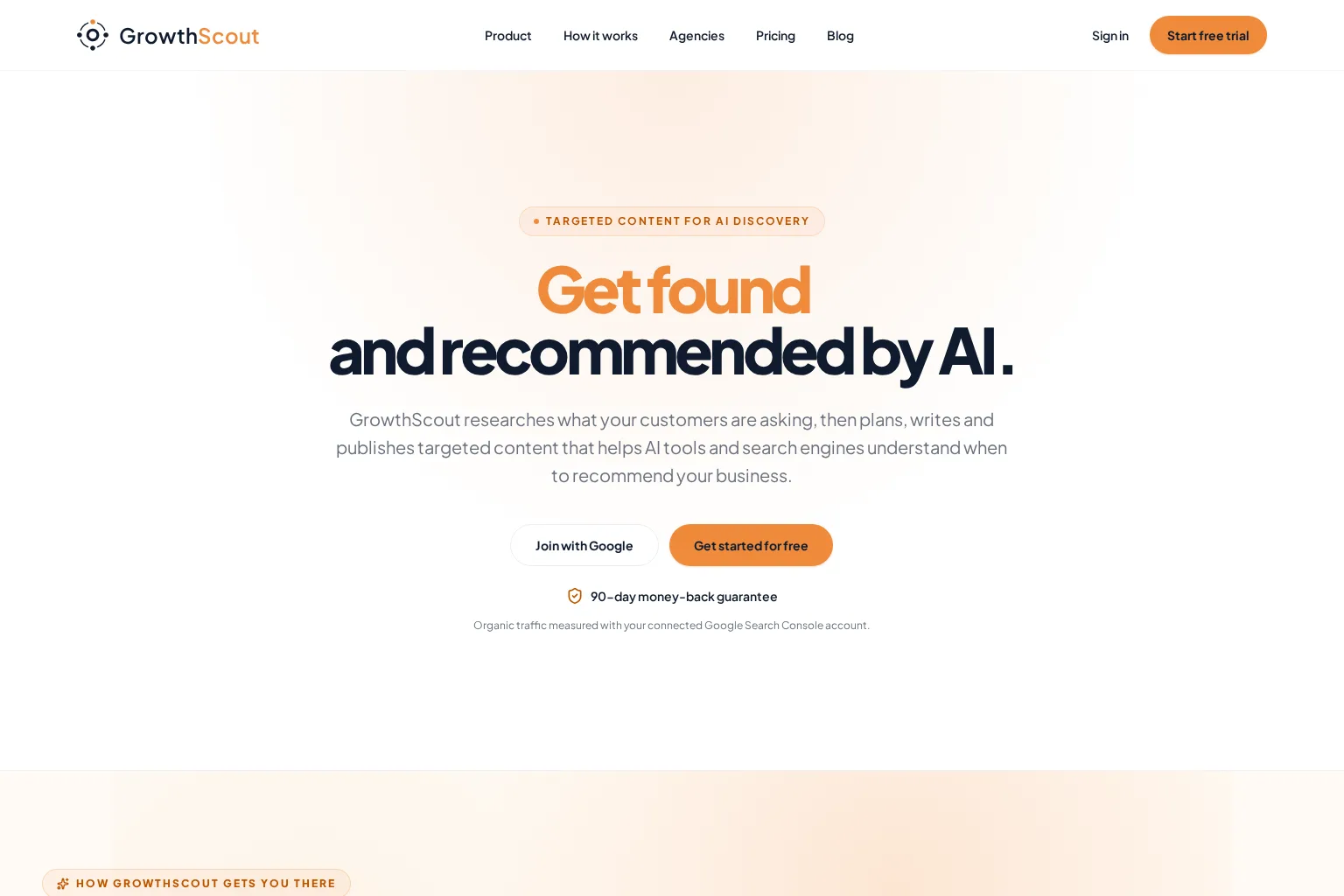
GrowthScout is our pick for growth teams and agencies that want one business-aware workflow from opportunity research to a scheduled, reviewable article. It is particularly strong when the priority is maintaining a realistic publishing rhythm without rebuilding briefs, spreadsheets, and prompts for every new topic.
Key capabilities
GrowthScout crawls the selected website, uses its goals, audiences, competitors, and existing content as working context, then audits important pages and prioritises content opportunities. Those opportunities can become a visible 30-day calendar, followed by research, drafting, editorial review, and publishing through WordPress, webhooks, or a manual workflow. Its Google Search Console connection is designed to measure organic traffic using search clicks.
We also like the emphasis on review-first automation. Teams can edit copy and imagery before publishing, then enable scheduled delivery only after the workflow is trusted. See how the connected organic-growth workflow works.
Limitations
GrowthScout is purpose-built for the content operations loop. Teams that need a deep standalone backlink index, extensive technical SEO diagnostics, or enterprise-level SEO data analysis may still pair it with a specialist platform. Automatic publishing should remain subject to an accountable editorial process.
Pricing approach
GrowthScout offers a three-day free trial with three article generations. The public site lists the ongoing plan at £74 per month after the trial, alongside a 90-day money-back guarantee subject to its terms.
Who should choose it
Choose GrowthScout if we need to turn website context, opportunity research, planned content, draft production, and publishing into one repeatable system. It is also a practical choice for teams that want business-aware content direction rather than another blank AI writing workspace.
2. Semrush Content Toolkit
Best use case
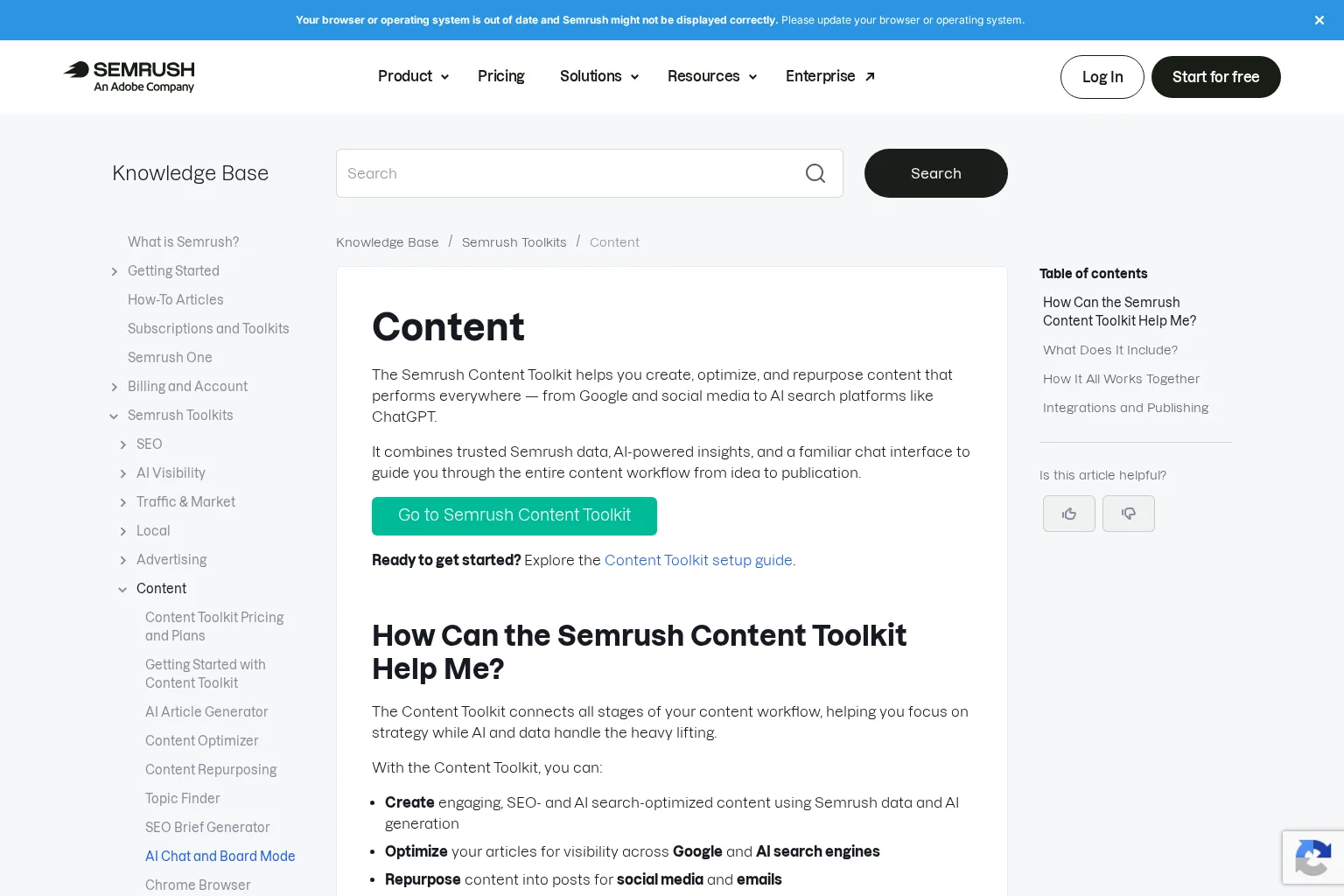
Semrush Content Toolkit suits teams that already rely on Semrush data and want to add AI-assisted topic discovery, brief generation, drafting, optimisation, repurposing, and publishing to that ecosystem.
Key capabilities
The toolkit includes Topic Finder, an SEO Brief Generator, an AI Article Generator, a Content Optimizer, and content repurposing. Semrush says the workflow can move from topic ideas to briefs, articles, optimisation, and publication, with WordPress among the listed integrations. This makes it a broad content-production layer for teams that want data-driven inputs alongside familiar SEO tooling.
Limitations
The platform is broad, which can be a benefit or a trade-off. Teams may need to define their own operating cadence, approval process, and connection between business priorities and the content queue. Its best value often comes when the team is already using other Semrush products.
Pricing approach
The public Content Toolkit plan is listed at $60 per month when billed annually. The listed allowance includes five SEO Boosted articles per month, with further credits available as an add-on. Check the live plan and usage limits before committing.
Who should choose it
Choose Semrush Content Toolkit if we want a content automation layer that sits inside a wider SEO, competitive research, and visibility platform, especially when Semrush is already central to our stack.
3. Ahrefs AI Content Helper
Best use case
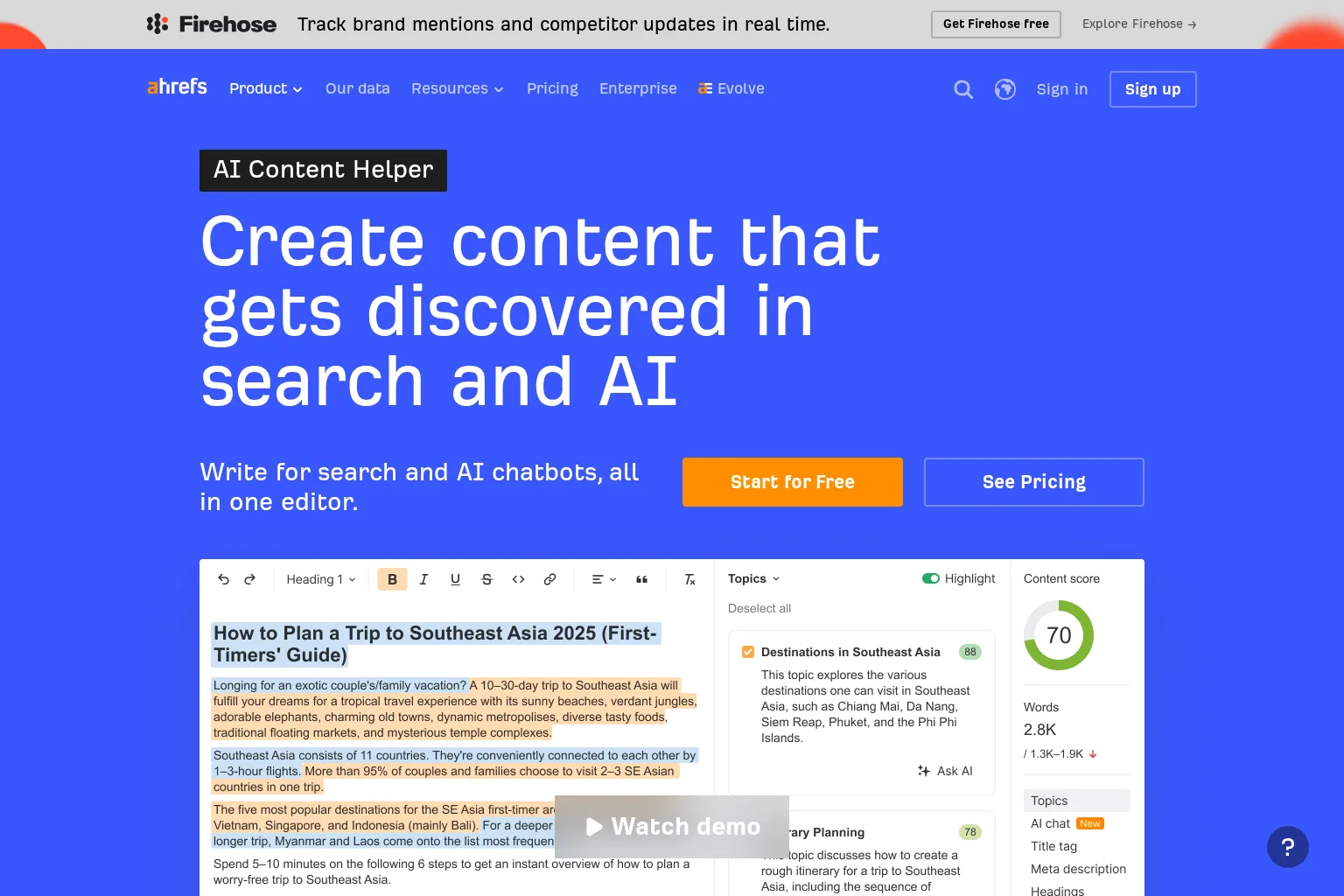
Ahrefs AI Content Helper is best for teams that want to improve the quality and topical coverage of strategic articles, backed by Ahrefs research, rather than fully automate a content calendar and publishing operation.
Key capabilities
AI Content Helper analyses search intent, compares a draft with top-ranking pages, highlights topic coverage gaps, and provides in-editor AI assistance. It also supports brand guidance through a Brand Kit. Combined with Ahrefs Keywords Explorer, Site Explorer, Rank Tracker, and Site Audit, it can be a strong research and optimisation layer around a human-led content process.
Limitations
This is not a turnkey content operations platform. Planning, workflow orchestration, approvals, scheduled CMS publishing, and continuous production management will normally require separate tools or processes. It is strongest for improving individual pieces and informing high-value editorial decisions.
Pricing approach
Ahrefs lists one free document per month, a $99-per-month AI Content Helper plan with 50 documents, and a $299-per-month Content Kit tier with 250 documents. Plan allowances should be checked against the number of pages and drafts we expect to optimise.
Who should choose it
Choose Ahrefs AI Content Helper if research depth and content improvement matter more than hands-off production. It is a good fit for SEO teams that already use Ahrefs and want to tighten the connection between SERP evidence and editorial quality.
4. Surfer
Best use case
Surfer is a good option for teams that want a content optimisation hub with AI visibility tracking, guided drafting, content audits, internal linking, and WordPress or CMS integrations.
Key capabilities
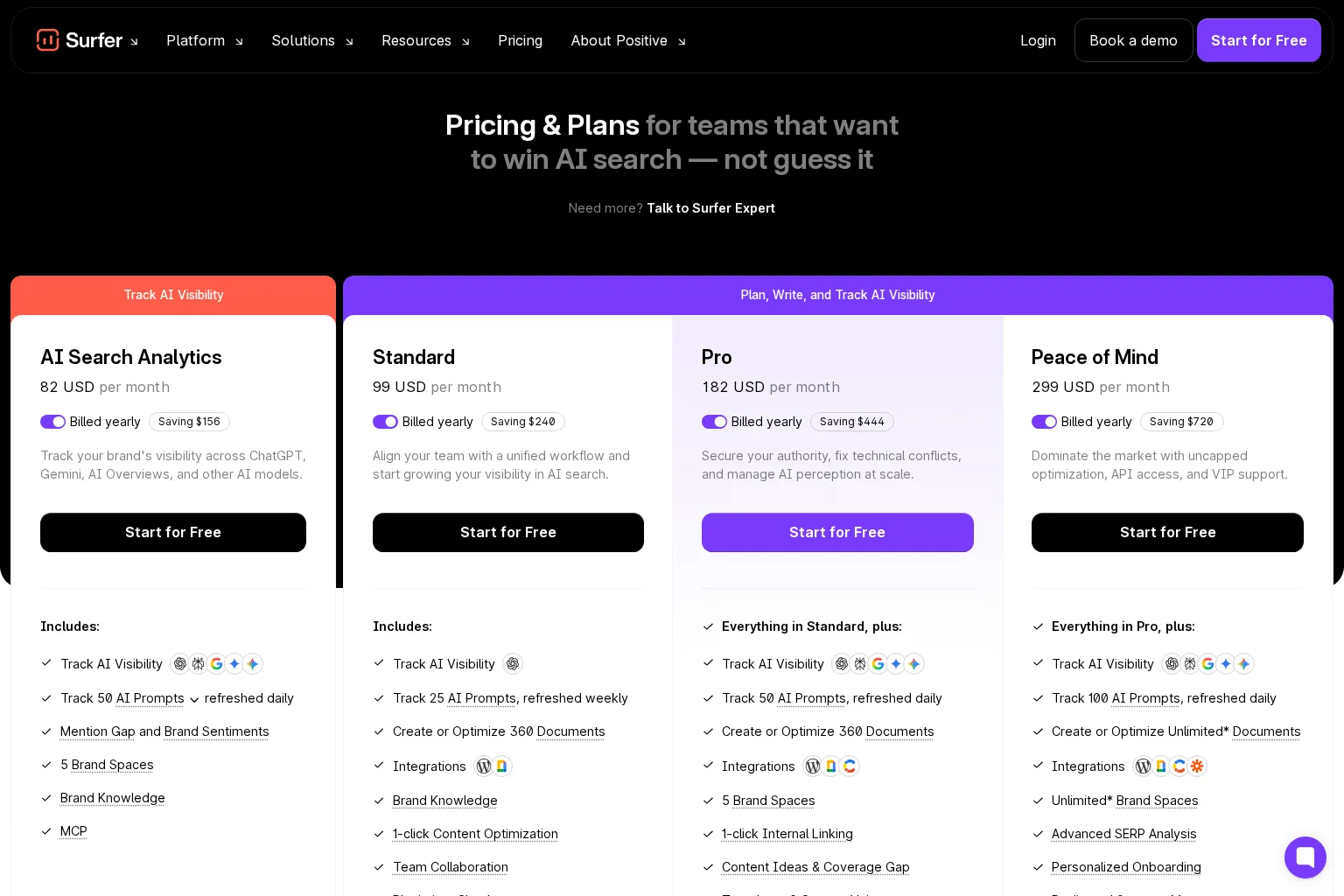
Surfer's plans include document creation and optimisation, an AI writing assistant, content scoring, content audit features, ranking-drop detection, keyword research, topical mapping, and AI visibility tracking on eligible plans. Higher tiers add internal linking, content ideas and coverage-gap support, cannibalisation reporting, additional brand spaces, and broader API access.
Limitations
Surfer is especially oriented toward optimising and monitoring content. Teams should validate whether the included document limits, tracked pages, and AI prompt allowances fit their publishing volume. It may still need a separate planning system or a defined editorial workflow for prioritisation and scheduling.
Pricing approach
The public annual-billing plans start at $49 per month for Discovery and $99 per month for Standard. Higher plans increase document, visibility-tracking, workspace, and workflow allowances. Pricing and packaging can change, so confirm the live plan before purchase.
Who should choose it
Choose Surfer if we want to improve existing and new content continuously, with particular attention to on-page coverage, AI-search visibility, and internal-linking workflows. It is a strong choice when optimisation is the primary bottleneck.
5. Writesonic SEO AI Agent
Best use case
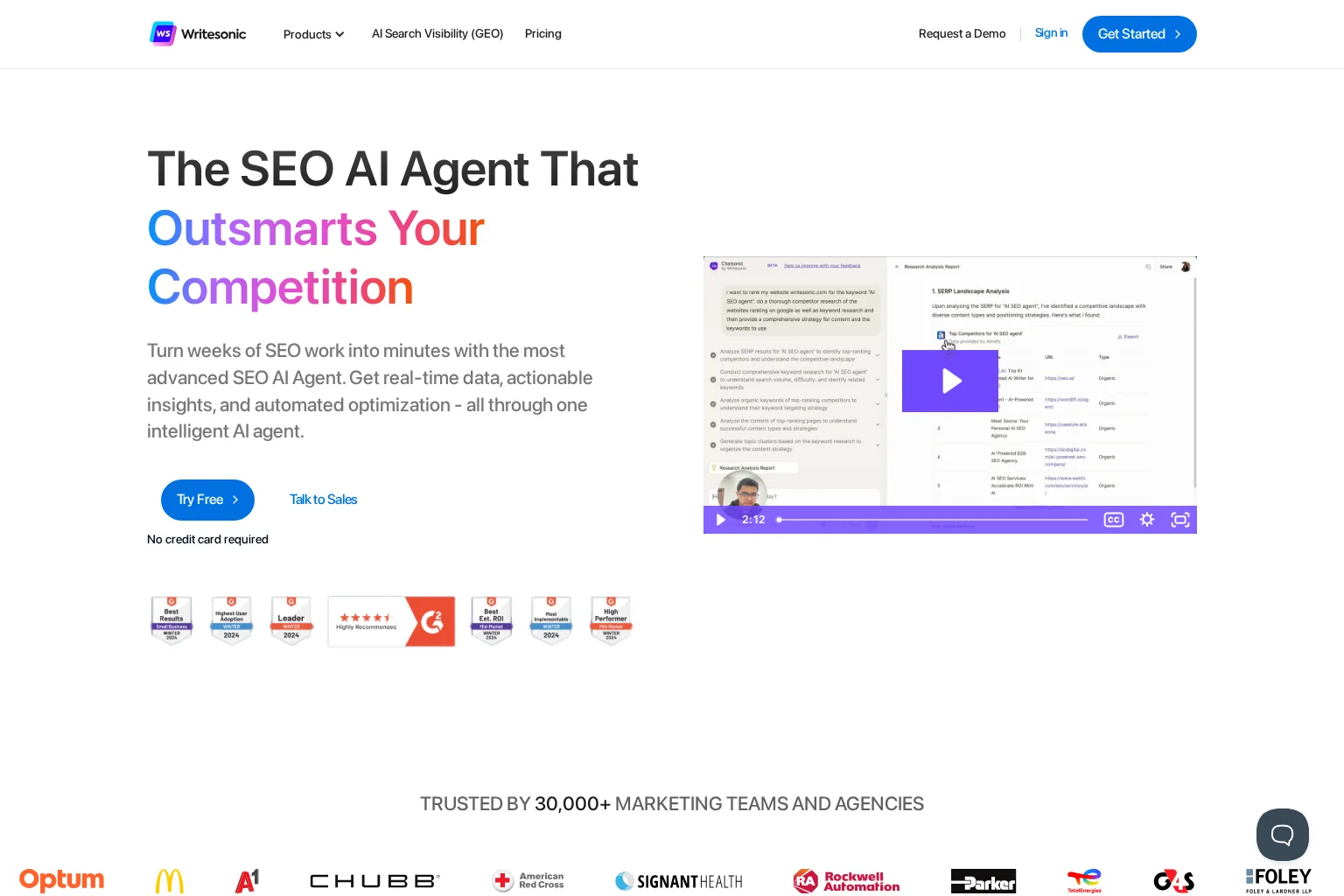
Writesonic SEO AI Agent fits teams looking for an agent-led approach to SEO research, content planning, technical recommendations, internal-link opportunities, and ongoing optimisation.
Key capabilities
Writesonic positions the SEO AI Agent around real-time SERP analysis, competitor intelligence, strategic content planning, technical audits, content enhancement, internal linking, rich-result optimisation, and performance tracking. It is designed to help a team query and act on SEO work through an AI-agent interface rather than switching between multiple disconnected tools.
Limitations
Agent-led workflows require careful validation. Before acting on recommendations, we should confirm the data sources, integrations, implementation permissions, and review controls for our site. Teams should also establish who owns technical changes, content approval, and performance interpretation.
Pricing approach
The SEO AI Agent page promotes access at $99 per month, but the right package can depend on team needs and product configuration. Treat that as a starting point and verify the live pricing and included limits during evaluation.
Who should choose it
Choose Writesonic if we want an AI-led SEO assistant that spans research, planning, technical work, and content improvement, and we are prepared to put clear human checks around its recommendations.
How to choose the right platform
Start with the constraint that is slowing organic growth today:
- Inconsistent planning and publishing: choose a connected workflow platform such as GrowthScout.
- A Semrush-led search stack that needs content automation: choose Semrush Content Toolkit.
- High-value articles that need stronger SERP-informed coverage: choose Ahrefs AI Content Helper.
- Content refreshes, on-page optimisation, and AI visibility: choose Surfer.
- Agent-led SEO analysis across content and technical work: choose Writesonic SEO AI Agent.
We recommend running a small pilot with a defined topic cluster, not an unbounded content experiment. Set a baseline for indexed pages, non-branded clicks, impressions, rankings, conversions, and production cycle time. Review draft quality and implementation accuracy before increasing the publishing cadence.
For agencies, the same rule applies across every client: reuse the process, not the generic content. GrowthScout for agencies keeps website context, opportunities, calendars, article settings, and delivery workflows separate for each site.
The bottom line
The best organic traffic automation platform is not the one that generates the most pages. It is the one that helps us consistently choose better opportunities, create genuinely useful content, improve what already exists, and publish with appropriate review.
If the missing piece is a connected, business-aware SEO content workflow, start a GrowthScout trial and use the first plan to test the full loop: research, prioritisation, production, review, publishing, and measurement.